
GT801 receives FDA Orphan Drug Designation for autoimmune hemolytic anemia after two patients achieved complete responses in preliminary clinical findings.
Written By: Siddhi Bhadekar, M. Pharm (QA)
Reviewed by: Pharmacally Editorial Team
The U.S. Food and Drug Administration (FDA) has granted Orphan Drug Designation (ODD) to GT801, an investigational in vivo chimeric antigen receptor T-cell (CAR-T) therapy, for autoimmune hemolytic anemia (AIHA), according to an October 17, 2026, announcement from Vivacta Biotechnology (Shanghai) Co., Ltd. (Vivacta Bio). The company was spun out of the in vivo CAR-T platform of Beijing Grit Biotherapeutics Co., Ltd. (Grit Bio), and GT801 is its lead candidate.
Grit Biotechnology is evaluating GT801 in adults with relapsed or refractory CD19-positive B-cell hematologic malignancies and AIHA in study GRIT-CD-CHN-801-001 (NCT07205315). The registry currently identifies the study as Early Phase 1.
FDA Designation Supports Development
Under the U.S. Orphan Drug Act, designation is intended to encourage the development of treatments for rare diseases. Sponsors may qualify for incentives, including tax credits for qualified clinical testing and exemption from applicable marketing application user fees. Products subsequently approved for the designated indication may also qualify for seven years of orphan-drug marketing exclusivity if the relevant requirements are met.
GT801 Uses In Vivo Delivery of CAR-encoding mRNA
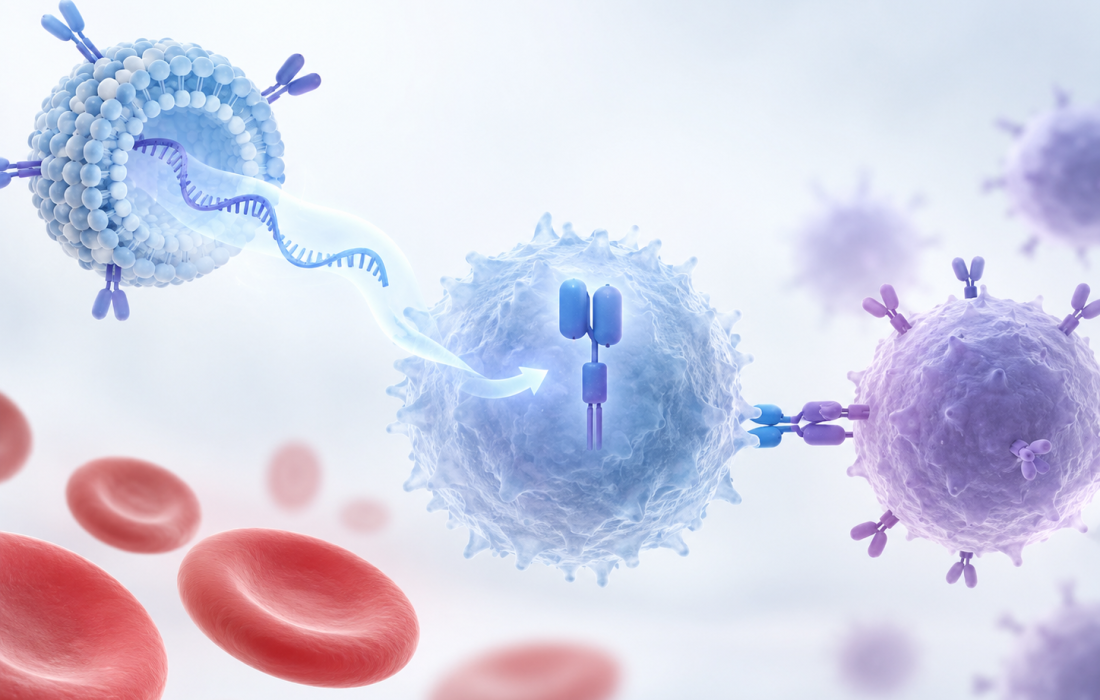
Unlike conventional CAR-T therapies, which generally require T cells to be collected and modified outside the body, GT801 is designed to generate anti-CD19 CAR-expressing T cells in vivo. According to Vivacta Bio, the candidate uses lipid nanoparticles (LNPs) to deliver mRNA encoding an anti-CD19 CAR to T cells. The resulting CAR-expressing cells are designed to target CD19-positive B cells.
The delivery system combines ionizable cationic lipids with the company’s CLAMP platform, which uses a T-cell-targeting VHH antibody, site-specific conjugation and controlled ligand density. The company says this design aims to improve T-cell targeting while limiting nonspecific uptake.
Vivacta Bio also describes repeat dosing and avoidance of cell isolation, ex vivo expansion and lymphodepletion as potential advantages. These remain proposed features of the platform rather than established comparative clinical benefits for GT801.
Preliminary Responses Reported in Two Patients
AIHA occurs when autoantibodies accelerate red blood cell destruction, potentially causing anemia, fatigue and shortness of breath. Severe disease can be life-threatening, and some patients have inadequate disease control despite multiple treatments.
At the 2026 American Society of Gene & Cell Therapy (ASGCT) Annual Meeting, Vivacta Bio reported preliminary findings from two patients with AIHA treated with GT801. Both achieved a complete response (CR). One patient reached CR at Week 4 and remained in CR at Week 8 and Month 3, while the second reached CR at Week 10.
Both patients also showed sustained peripheral B-cell depletion, increased hemoglobin and reductions in lactate dehydrogenase, indirect bilirubin and reticulocyte counts. These changes are consistent with reduced red blood cell destruction and support further evaluation of GT801 in AIHA.
The announcement does not provide dosing details, a comprehensive safety analysis or longer-term follow-up for both patients. The findings therefore represent preliminary clinical activity rather than an established estimate of response rate or remission durability.
Clinical Interpretation
GT801 combines an in vivo CAR-T delivery approach with preliminary clinical responses in AIHA. The reported B-cell depletion and improvements in hemolysis-related laboratory markers support continued investigation, but the two-patient dataset is too small to establish the durability of response or characterize the therapy’s safety profile.
Further clinical data will need to clarify how long responses persist, whether patients can maintain disease control without corticosteroids or other immunosuppressive treatment, and how well repeat dosing is tolerated. The ability to avoid cell collection, ex vivo manufacturing and lymphodepletion may reduce treatment burden, but its clinical advantages remain to be demonstrated.
GT801’s significance will depend on whether subsequent studies confirm these early findings and establish a durable benefit-risk profile in patients with AIHA.
References
Vivacta Bio. Vivacta Bio and Grit Bio Announce FDA Orphan Drug Designation for In Vivo CAR-T Therapy GT801 in Autoimmune Hemolytic Anemia. PR Newswire, October 17, 2026.
A Clinical Study Evaluating the Safety and Efficacy of GT801 Injection in Adult Patients with Relapsed/Refractory CD19-positive B-cell Hematologic Malignancies and Autoimmune Hemolytic Anemia, ClinicalTrials.gov ID NCT07205315

About the Writer
Siddhi Rajendra Bhadekar (Linkedin) is an M.Pharm professional with expertise in medical and scientific writing, literature review, publication writing, and evidence synthesis, supported by four peer-reviewed publications.
She brings working knowledge of ICH-GCP, MedDRA, pharmacovigilance, ADR/AE reporting, clinical data management, and regulatory documentation.
With experience across pharmaceutical R&D, Quality Control, and Quality Assurance, she combines scientific research skills with strong attention to accuracy and detail.
Her background in manuscript development, publication planning, and scientific communication enables her to translate complex healthcare information into clear, reliable content.