
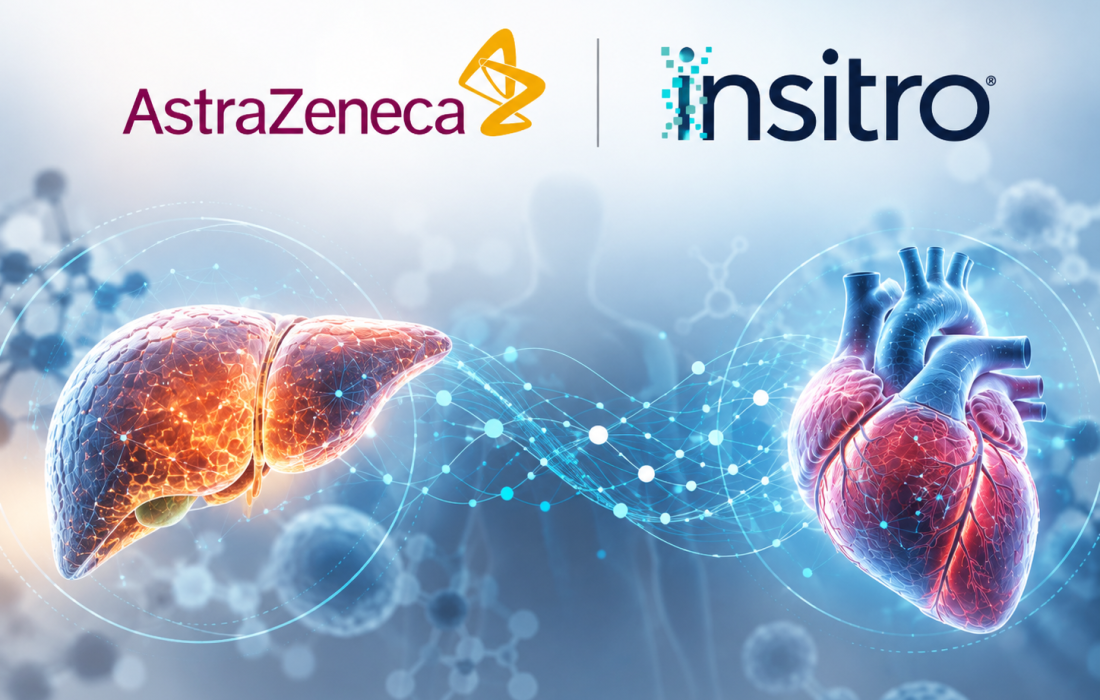
AstraZeneca partners with insitro on AI-driven drug discovery for MASH and cardiomyopathies, with $40 million upfront and up to $1.46 billion in milestones.
Written By: Umesh Hanumante,
M.Pharm (Reg. Affairs)
Reviewed By: Pharmacally Editorial Team
AstraZeneca has entered a worldwide exclusive research collaboration with insitro to discover novel therapeutic targets and medicines for metabolic dysfunction-associated steatohepatitis (MASH) and cardiomyopathies. The agreement combines insitro’s AI-driven analysis of human disease biology with AstraZeneca’s drug development and commercialization capabilities, targeting two disease areas in which biological differences between patients complicate treatment development.
Under the terms, insitro will receive $40 million upfront and is eligible for up to approximately $1.46 billion in discovery, development, and commercial milestone payments. The company will also receive tiered royalties in the single-digit percentage range on potential global product sales.
AI Platform to Identify Disease-Causing Biology
The collaboration will use insitro’s Virtual Human platform to identify causal biological mechanisms underlying both diseases. The platform integrates human and cellular datasets with machine learning to investigate how genetic variation relates to disease development and progression.
Rather than relying solely on associations between biological markers and disease, this approach aims to identify causal drivers that could provide more precise therapeutic targets. Such insights may help researchers prioritize targets with stronger links to human disease biology before committing resources to clinical development.
Insitro will apply its platform to the two indications and advance AstraZeneca-nominated targets from discovery through development candidate selection. AstraZeneca will take responsibility for subsequent clinical development, regulatory activities, and commercialization.
MASH and Cardiomyopathies Present Distinct Challenges
MASH, formerly known as non-alcoholic steatohepatitis (NASH), is an advanced form of metabolic dysfunction-associated steatotic liver disease (MASLD). It involves liver inflammation and hepatocellular injury and can progress to fibrosis, cirrhosis, and liver-related complications. Its biological complexity and variable progression have created a need for therapies that address underlying disease mechanisms.
Cardiomyopathies encompass disorders of the heart muscle that can impair cardiac function and, depending on the subtype, lead to heart failure, arrhythmias, or sudden cardiac death. Their causes and clinical courses vary, reflecting differences in genetic, metabolic, and other disease mechanisms.
In both areas, patients grouped under the same diagnostic category may have different underlying biological drivers. Identifying these differences could help researchers uncover targets relevant to specific disease mechanisms and improve the precision of therapeutic development. However, the value of this approach will depend on whether identified targets translate into meaningful clinical benefits.
Collaboration Combines AI Discovery With Pharmaceutical Development
Insitro founder and CEO Daphne Koller said the company’s platform can analyze complex human datasets to identify disease drivers and genetic insights. She highlighted the potential to combine this capability with AstraZeneca’s pharmaceutical expertise to advance new programs toward patients.
Sharon Barr, AstraZeneca’s executive vice president and head of BioPharmaceuticals R&D, emphasized the importance of selecting appropriate biological targets early in drug development. The collaboration reflects AstraZeneca’s broader interest in using AI to identify disease mechanisms and support the discovery of medicines directed at their underlying causes.
Development Milestones Remain Ahead
The agreement establishes a discovery-stage collaboration, not a clinical-stage drug program. The companies have not disclosed specific targets, candidate molecules, development timelines, or clinical trial plans for the collaboration.
Insitro will lead target discovery and candidate advancement, while AstraZeneca will oversee clinical testing and commercialization. Any future therapies will need to demonstrate safety and efficacy through preclinical and clinical evaluation before they can reach patients.
The potential milestone value highlights the commercial scale of the partnership, but the payments are contingent on future research, development, and commercial achievements. The collaboration’s scientific significance will ultimately depend on whether AI-derived insights produce validated targets and medicines that improve outcomes in MASH and cardiomyopathies.
Reference
insitro Announces a Strategic Collaboration with AstraZeneca for AI-enabled Discovery of Novel Therapeutics for MASH and Cardiomyopathies, insitro, 15 October 2026

About the Writer
Umesh Hanumante (M.Pharm) (LinkedIn) is a pharmacy professional and healthcare writer with a background in Regulatory Affairs, pharmaceutical innovation, and clinical research. He has around two years of industry experience as an Executive PMT at Troikaa Pharmaceuticals Ltd and qualified GPAT 2024. His areas of interest include regulatory compliance, dossier preparation, clinical trials, emerging therapies, and advancements in the global pharmaceutical and healthcare sector.