
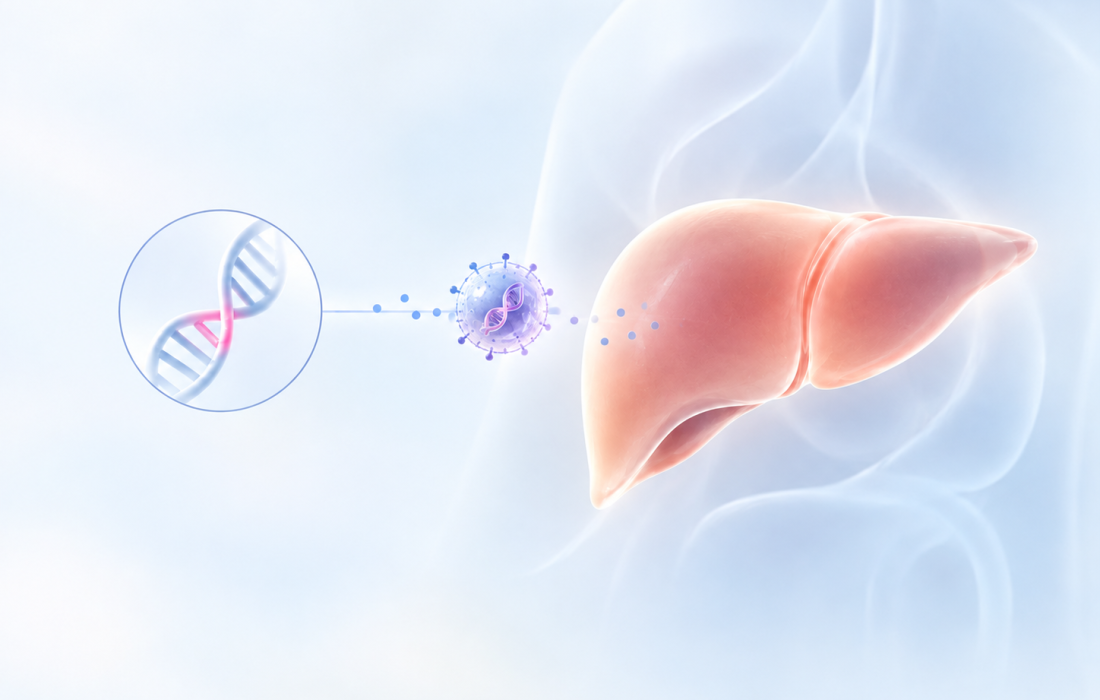
Beam reports initial BEAM-301 data in GSDIa, including at least 15-hour controlled fasting in two evaluable patients and reduced starch requirements.
Written By: Anshu Gupta, PharmD
Reviewed By: Pharmacally Editorial Team
Beam Therapeutics reported initial Phase 1/2 clinical data for BEAM-301, an investigational in vivo base-editing therapy designed to correct the R83C mutation associated with glycogen storage disease type Ia (GSDIa). Following a single intravenous infusion, patients showed improvements in fasting tolerance and reductions in prescribed daily starch intake. The findings will be presented at the 33rd Annual Congress of the European Society of Gene and Cell Therapy (ESGCT), scheduled for October 27–30, 2026, in Hamburg, Germany.
The results provide an early clinical signal for an approach intended to address the underlying genetic defect rather than rely exclusively on dietary management. However, only six patients had received treatment at the June 26, 2026, data cutoff, and follow-up differed substantially between dose cohorts.
Targeting the Genetic Cause of GSDIa
GSDIa is an autosomal recessive disorder caused by mutations in the G6PC1 gene, which impair glucose-6-phosphatase activity and disrupt glucose homeostasis. Patients can experience severe fasting hypoglycemia, while those carrying the R83C mutation may require frequent cornstarch administration, including overnight, to maintain blood glucose levels.
BEAM-301 uses base-editing reagents delivered through a liver-targeting lipid nanoparticle (LNP) formulation. It is designed to correct the R83C mutation in vivo, potentially restoring endogenous glucose production during fasting.
The therapy is being evaluated in an open-label Phase 1/2 dose-exploration and dose-expansion trial assessing safety, tolerability, pharmacodynamics, pharmacokinetics and efficacy (ClinicalTrials.gov identifier: NCT06735755).
Improvements in Fasting Tolerance
At the data cutoff, six patients had received a single intravenous infusion: three at 20 mg and three at 40 mg. Median follow-up was 313 days in the 20 mg cohort and 53 days in the 40 mg cohort. One patient in the 40 mg cohort was not evaluable for efficacy at the data cutoff.
Median baseline time to fasting hypoglycemia was 2.9 hours in the 20 mg cohort and 2.5 hours in the 40 mg cohort. By Day 36, the median had increased to 4.3 hours in the 20 mg cohort. Both evaluable patients receiving 40 mg achieved at least 15 hours of controlled fasting, the maximum duration specified by the study protocol.
The findings are consistent with the company’s interpretation that BEAM-301 restored endogenous glucose production. However, the 40 mg result reflects only two evaluable patients and does not establish the magnitude, consistency or durability of benefit in a larger population.
Reduced Starch Requirements
Reductions in prescribed daily starch intake, guided by continuous glucose monitoring, were also reported. In the 20 mg cohort, requirements decreased from baseline by 74% at Day 128, 71% at Day 227 and 11% at Day 387. In the 40 mg cohort, reductions were 71% at Day 50 and 92% at Day 93.
Daily starch administration frequency also decreased. Patients in the 20 mg cohort moved from six to seven doses per day at baseline to zero to four doses per day. In the 40 mg cohort, administration decreased from five to six doses to two to four doses per day. Triglyceride levels remained comparable to baseline at the last follow-up.
These changes could reduce the daily burden of dietary management. However, the variation across assessment points, including the smaller reduction reported at Day 387 in the 20 mg cohort, underscores the need for longer follow-up. The available data do not establish why the reductions varied or whether dietary supplementation can be safely discontinued.
Safety and Tolerability
All six patients experienced at least one treatment-emergent adverse event considered related to BEAM-301. Five serious adverse events were reported, all resolving within two to 10 days, including three Grade 3 infusion-related reactions.
The company noted that shorter-acting steroid premedication may have contributed to these reactions and said the premedication regimen had subsequently been optimized. The announcement did not specify the changes made to the regimen.
Transaminase elevations were transient and resolved without intervention. All were Grade 1 except for one Grade 2 elevation in aspartate aminotransferase. No dose-limiting toxicities, treatment discontinuations due to treatment-emergent adverse events or deaths were reported.
Although these findings provide an initial assessment of tolerability, the small study population cannot characterize uncommon adverse events or establish long-term safety.
Implications for Further Development
Beam plans to present the findings during the ESGCT poster session on October 28, 2026. Further follow-up will be needed to determine whether improvements in fasting tolerance persist, characterize longer-term safety and assess whether the findings are reproducible in additional patients.
The initial results support continued investigation of BEAM-301 as a mutation-targeted treatment for GSDIa. Its potential clinical value will depend on whether a single treatment can produce sustained improvements in glucose regulation and meaningfully reduce the burden of dietary management. The current data offer an early clinical signal, not yet evidence of durable disease correction.
Reference
Beam Therapeutics to Present Initial Data from Phase 1/2 Trial of BEAM-301 in Glycogen Storage Disease Type Ia (GSDIa) at the ESGCT 33rd Annual Congress, Beam Therapeutics, 13 October 2026
A Phase 1/2, Dose-Exploration Study to Evaluate the Safety and Efficacy of BEAM-301 in Patients with Glycogen Storage Disease Type Ia (GSDIa), ClinicalTrials.gov ID NCT06735755

About the Writer
Anshu Gupta (LinkedIn) is a PharmD professional and healthcare writer with interests in clinical research, pharmacovigilance, regulatory affairs, and medical writing. She has presented research at academic conferences and completed certifications in Good Clinical Practice (GCP), ICH-GCP, and drug safety. Passionate about clinical trials and evidence-based medicine, she is committed to translating scientific evidence into accurate, reliable, and accessible healthcare content.