
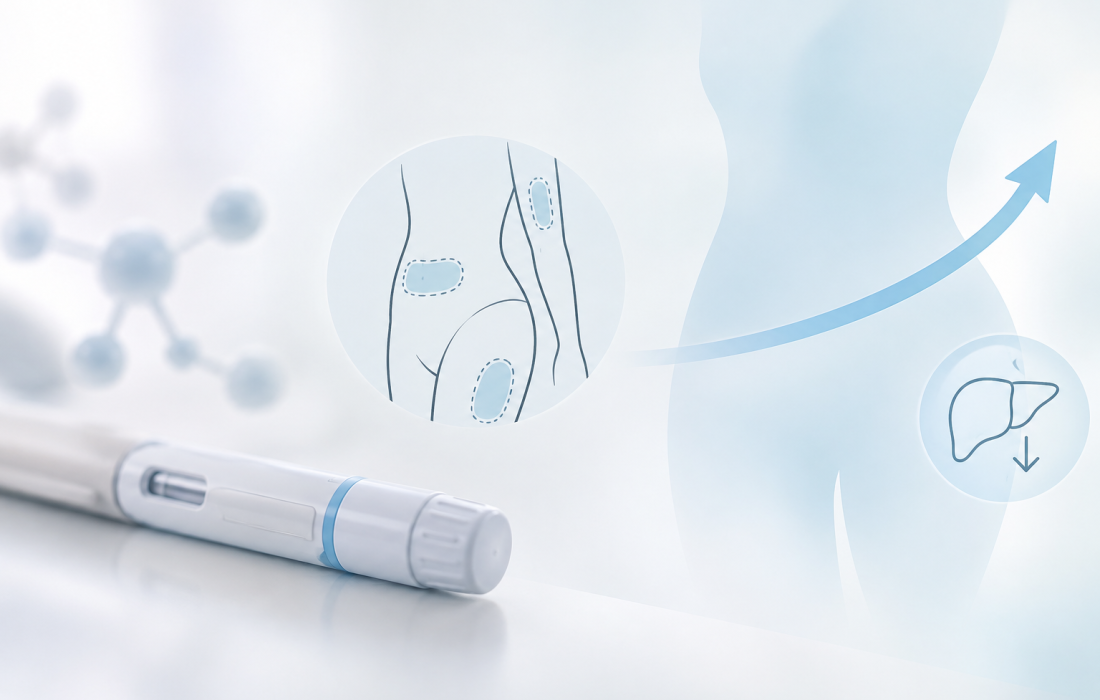
Kailera reports Phase 1 data showing flexible ribupatide injection sites and early weight-loss signals with KAI-4729, including 16% mean weight loss.
Written By: Mayuri Vaja, PharmD
Reviewed By: Pharmacally Editorial Team
Kailera Therapeutics presented new clinical findings from its obesity pipeline at the 62nd Annual Meeting of the European Association for the Study of Diabetes (EASD) in Milan, highlighting Phase 1 data for ribupatide injection and KAI-4729. The data add clinical evidence for two investigational therapies targeting metabolic disease through different incretin-based approaches.
Ribupatide Shows Similar Exposure Across Injection Sites
The Phase 1 ribupatide study (NCT07044401) evaluated whether the site of subcutaneous administration affected drug exposure or safety. The randomized, single-dose, three-period crossover study enrolled 51 adults with overweight or obesity.
Participants received a single 2 mg dose of ribupatide during each 29-day treatment period, with injections administered at the abdomen, upper arm or thigh according to a randomized sequence.
Plasma ribupatide exposure following administration in the upper arm or thigh was similar to exposure following abdominal injection. These findings support the upper arm and thigh as potential alternative subcutaneous injection sites for ribupatide.
Ribupatide was generally well tolerated across the three injection sites. Most treatment-emergent adverse events were mild and gastrointestinal in nature, and the study identified no new safety signals associated with injection location.
The findings could provide greater flexibility for patients using once-weekly subcutaneous ribupatide if the results are confirmed in later-stage development.
KAI-4729 Shows Early Weight-Loss and Liver-Fat Signals
Hengrui Pharma, Kailera’s development partner, also presented Phase 1 (NCT06762600) findings for KAI-4729 (HRS-4729), an investigational GLP-1/GIP/glucagon receptor triple agonist.
The randomized, double-blind, placebo-controlled first-in-human study evaluated safety, tolerability, pharmacokinetics and pharmacodynamics in adults across single-ascending-dose and multiple-ascending-dose cohorts. In the multiple-dose portion, participants received once-weekly doses of 1 mg, 4 mg, 8 mg or 12 mg KAI-4729, with 4 mg ribupatide serving as an active control.
At Week 12, participants receiving 12 mg KAI-4729 showed a 16.0% mean reduction in body weight from baseline. The same cohort showed a 67.3% mean reduction in liver fat content.
The 4 mg ribupatide active-control group, which included 10 participants, showed a 16.7% mean reduction in body weight and a 38.4% mean reduction in liver fat content at Week 12.
Because these findings come from a small Phase 1 cohort, the results represent an early clinical signal rather than established efficacy. Further studies with larger populations and longer follow-up will be needed to characterize the treatment’s weight-loss potential and metabolic effects.
KAI-4729 and ribupatide were generally well tolerated in the study, with most treatment-emergent adverse events described as mild to moderate and gastrointestinal in nature.
Kailera Advances Multiple GLP-1 Programs
The EASD presentations also included Phase 2 and Phase 3 clinical data from Hengrui’s programs that are now being developed globally by Kailera. These included ribupatide in Chinese participants with obesity and polyendocrine metabolic ovarian syndrome, as well as oral HRS-7535, an investigational small-molecule GLP-1 receptor agonist, in adults with type 2 diabetes.
Kailera plans to initiate a Phase 1 study of KAI-4729 outside China in 2026, with data expected in 2027.
Ribupatide injection is currently being evaluated in the global KaiNETIC Phase 3 program for obesity. Hengrui has also submitted a New Drug Application to China’s National Medical Products Administration for ribupatide injection for long-term weight management in adults.
Under a May 2024 agreement, Hengrui granted Kailera exclusive global rights outside Greater China to develop, manufacture and commercialize its portfolio of GLP-1-based therapies, including ribupatide injection, ribupatide oral and KAI-4729.
The latest EASD findings therefore provide additional clinical data across Kailera’s developing obesity portfolio, with ribupatide generating evidence supporting flexibility in injection-site administration and KAI-4729 producing an early signal of weight and liver-fat reduction that will require confirmation in subsequent clinical development.
Reference
Kailera Therapeutics Presents New Clinical Data at EASD 2026 Annual Meeting, Kailera Therapeutics, 01 October 2026
A Single-dose Study to Investigate the Effect of Injection Site on KAI-9531 Relative Bioavailability in a Range of Body Mass Indices, ClinicalTrials.gov ID NCT07044401
A Study to Evaluate the Safety, Tolerability, Pharmacokinetics and Pharmacodynamics of HRS-4729 Injection in Healthy Subjects, ClinicalTrials.gov ID NCT06762600

About the Writer
Mayuri Vaja (Linkedin) is a Pharm.D professional with a strong interest in clinical research, pharmacovigilance, and medical writing, supported by certifications in pharmacovigilance and academic projects exploring AI in healthcare and drug safety.
With a growing focus on evidence-based healthcare and scientific communication, she is developing expertise in clinical research and translating healthcare evidence into clear, meaningful content.
As a Pharmacally healthcare writer, Mayuri is committed to creating accurate, research-driven, and clinically relevant healthcare content while continuously strengthening her professional skills.