
Tectonic Therapeutic reports favorable Phase 1a results for TX2100 in HHT. Learn about the FDA Fast Track designation, safety profile, and upcoming Phase 1b/2 clinical trials.
Written By: Mayuri Vaja, PharmD
Reviewed By: Pharmacally Editorial Team
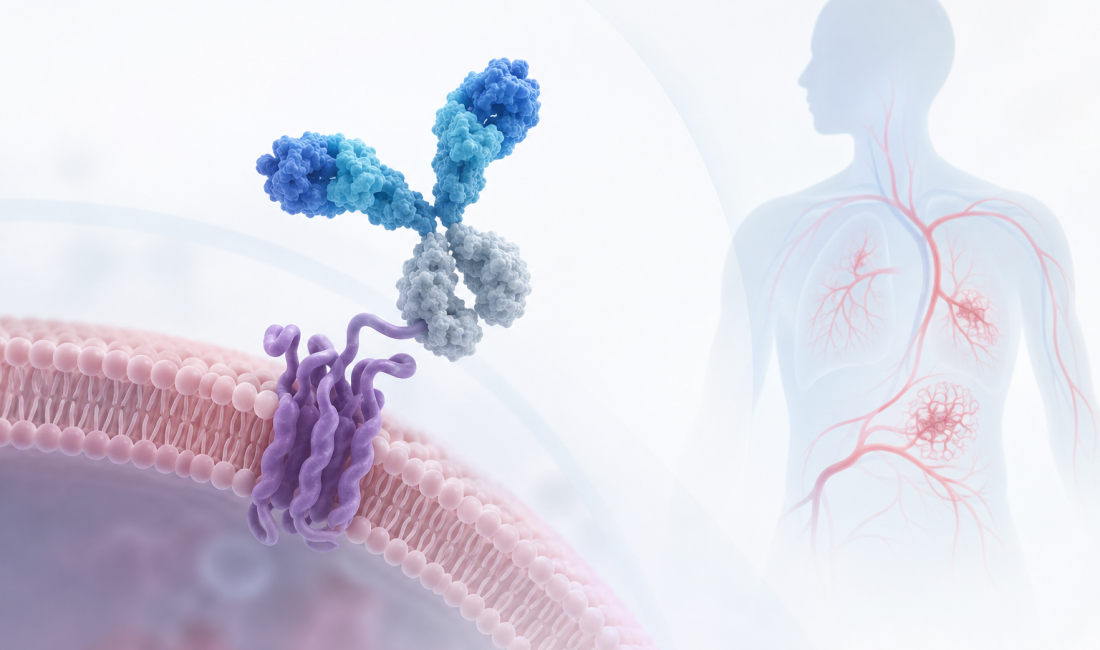
Tectonic Therapeutic announced favorable topline results from its Phase 1a clinical trial evaluating TX2100, an investigational VHH-Fc fusion antagonist antibody targeting the APJ receptor, in healthy adult volunteers. TX2100 is being developed as a potential treatment for hemorrhagic telangiectasia (HHT), a rare inherited vascular disorder with no currently approved therapies.
Phase 1a Study Shows Favorable Safety and PK
The randomized, double-blind, placebo-controlled Phase 1a first-in-human study enrolled 48 healthy adults across six sequential dose cohorts. Participants were randomized 3:1 to receive a single ascending dose of TX2100 or placebo through intravenous (IV) or subcutaneous (SC) administration.
The six cohorts evaluated 0.1 mg/kg IV, 0.3 mg/kg IV, 100 mg SC, 1 mg/kg IV, 300 mg SC, and 600 mg SC doses. Across all six cohorts, TX2100 was generally safe and well tolerated. Treatment-emergent adverse events were mild or moderate and transient, with no deaths, serious adverse events, or severe treatment-emergent adverse events. No clinically significant changes were observed in vital signs, laboratory assessments, or electrocardiograms. Anti-drug antibody results remain pending.
Pharmacokinetic findings showed target-mediated drug disposition (TMDD) at lower concentrations, consistent with high-affinity binding of TX2100 to APJ. The observed PK profile supports exploration of once-weekly and every-other-week SC dosing in future studies.
Dose selection for the planned Phase 1b and Phase 2 studies is being guided by two independent approaches: exposure associated with high receptor occupancy inferred from the Phase 1a TMDD findings and target exposure levels associated with activity in non-clinical HHT models. The two approaches converged on a consistent target exposure range.
The Phase 1a program is continuing with Part B, a multiple-dose cohort that has completed enrollment. Six healthy volunteers are receiving 600 mg SC on Day 1 followed by 200 mg SC doses on Days 8 and 15.
Detailed safety, tolerability, PK, and immunogenicity findings are expected at the CureHHT 16th HHT International Scientific Conference, scheduled for October 12–16, 2026.
TX2100 Targets APJ in HHT
TX2100 is a VHH-Fc fusion antagonist antibody designed to bind APJ, also known as the apelin receptor or APLNR. APJ is a G-protein coupled receptor involved in signaling by apelin, a peptide associated with angiogenic activity.
According to Tectonic’s preclinical data, APJ is upregulated during pathological angiogenesis, including in HHT models, while being relatively quiescent under normal physiological conditions. TX2100 is designed to inhibit disease-associated angiogenic signaling through selective APJ antagonism.
FDA Milestones and Next Clinical Studies
The FDA cleared Tectonic’s TX2100 IND application in August 2026, enabling the planned Phase 1b study in HHT patients in the U.S. In September 2026, the FDA granted Fast Track designation for HHT. Fast Track is intended to facilitate development and expedite review of investigational therapies for serious conditions with potential to address unmet medical needs.
Tectonic plans to initiate an open-label Phase 1b study by the end of 2026 in patients with hematologic-support-dependent HHT. The study is expected to evaluate the need for iron and red blood cell support and hematologic parameters.
A placebo-controlled Phase 2 study is planned to begin in parallel in early 2027 in patients with moderate-to-severe HHT, with expected endpoints including epistaxis, hemoglobin, hematologic support, and other HHT-relevant measures.
HHT affects an estimated 75,000 people in the U.S. and can cause recurrent bleeding, chronic anemia requiring iron infusions or blood transfusions, and arteriovenous malformations in organs including the lungs, brain, and liver. These abnormalities can lead to serious complications such as hemorrhage, stroke, heart failure, or death.
TX2100 remains investigational, and upcoming patient studies will determine whether its APJ-targeting mechanism and Phase 1a safety findings translate into clinical benefit in HHT.
Reference
Tectonic Therapeutic Announces Favorable Phase 1 Safety, Tolerability and PK Results for TX2100, a Novel Approach for the Treatment of Hereditary Hemorrhagic Telangiectasia (HHT), Tectonic Therapeutic, 29 September 2026

About the Writer
Mayuri Vaja (Linkedin) is a Pharm.D professional with a strong interest in clinical research, pharmacovigilance, and medical writing, supported by certifications in pharmacovigilance and academic projects exploring AI in healthcare and drug safety.
With a growing focus on evidence-based healthcare and scientific communication, she is developing expertise in clinical research and translating healthcare evidence into clear, meaningful content.
As a Pharmacally healthcare writer, Mayuri is committed to creating accurate, research-driven, and clinically relevant healthcare content while continuously strengthening her professional skills.