
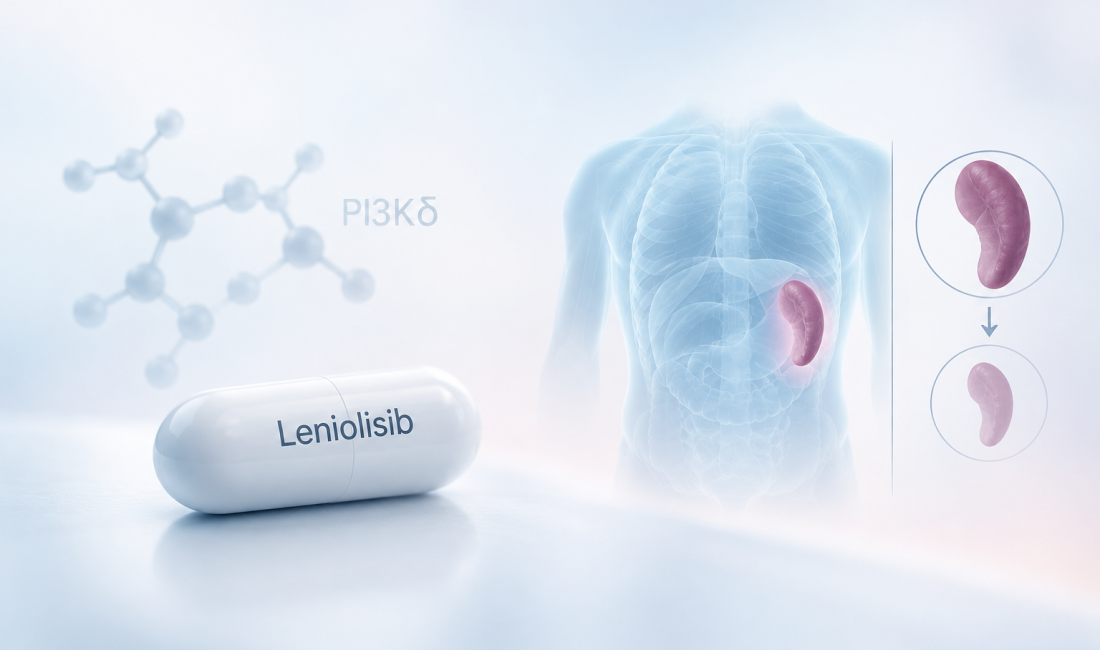
Pharming reports a 26.4% mean spleen volume reduction with leniolisib in a Phase II PID study, with no new safety signals and further data due at ESID 2026.
Written By: Charvi Kalal, PharmD
Reviewed By: Pharmacally Editorial Team
Pharming reported positive topline results from a Phase II study of leniolisib (NCT06549114) in patients with genetically defined primary immunodeficiencies (PIDs) associated with immune dysregulation and PI3Kδ signaling. The 13-patient study showed a mean 26.4% reduction in spleen volume, along with reductions in the size of index lesions. The company reported that leniolisib was generally well tolerated, with infections the most common adverse events and no new safety signals.
Phase II Study Evaluated Leniolisib Beyond APDS
The single-arm, open-label Phase II trial evaluated leniolisib in 13 patients with genetically defined PIDs characterized by immune dysregulation linked to PI3Kδ pathway signaling. The study used an intra-patient dose-escalation design and assessed safety, tolerability, pharmacokinetics, pharmacodynamics and clinical efficacy.
Lymphoproliferative disease was among the clinical manifestations evaluated. Pharming reported a 26.4% mean reduction in spleen volume, together with reductions in the size of index lesions.
The company also reported improvements across multiple measures of immune dysregulation, although the September 22 topline announcement did not provide numerical results for each individual measure.
Leniolisib Targets PI3Kδ Signaling
Leniolisib is an oral small-molecule phosphoinositide 3-kinase delta (PI3Kδ) inhibitor. The PI3Kδ pathway regulates signaling involved in immune-cell proliferation, differentiation, cytokine production and cell survival.
The drug is approved for activated PI3Kδ syndrome (APDS), a rare primary immunodeficiency caused by genetic alterations that lead to dysregulated PI3Kδ signaling. Pharming is evaluating whether inhibition of the same pathway could benefit patients with other genetically defined PIDs that share immune-dysregulation features.
The current Phase II study therefore extends clinical development beyond the established APDS population. Pharming cautioned that the safety and efficacy of leniolisib in PIDs with immune dysregulation outside APDS have not yet been established.
Safety Findings Remained Consistent with Known Profile
Leniolisib was generally well tolerated in the study. Infections were the most common events observed, and the company reported no new safety signals.
These findings were consistent with the established safety profile of leniolisib, although the topline announcement does not provide the detailed incidence, severity or treatment-relatedness of individual adverse events.
The limited topline disclosure also means that the reported 26.4% spleen-volume reduction should not be interpreted as a response rate or comparative treatment effect. The study was single-arm and did not include a control group.
Nine Patients Also Had CVID
Of the 13 participants enrolled, nine had a diagnosis of common variable immunodeficiency (CVID). Pharming is conducting a separate Phase II study specifically evaluating leniolisib in patients with CVID and immune dysregulation, with or without an identified genetic cause.
The company expects to report topline results from that study in the fourth quarter of 2026.
Additional Data Expected at ESID 2026
The topline findings have been accepted as a late-breaking abstract for the 22nd Biennial Meeting of the European Society for Immunodeficiencies (ESID), scheduled for October 14–17, 2026, in the Netherlands.
Additional efficacy and safety data from the study are expected to be presented at the meeting. These findings, together with the forthcoming CVID Phase II readout, will define the potential scope of leniolisib development across a broader group of patients with primary immunodeficiencies and immune dysregulation.
Reference
Pharming announces positive Phase II topline data for leniolisib in PIDs with immune dysregulation accepted as late-breaking abstract at ESID 2026, Pharming, 22 September 2026
Leniolisib for Immune Dysregulation in PIDs, ClinicalTrials.gov ID NCT06549114

About the Writer
Charvi Kalal (LinkedIn) is a Pharm.D intern and aspiring medical writer with hands-on experience in medical writing, clinical research, pharmacovigilance, and clinical pharmacy. She has experience in medical content writing through CliMed, along with exposure to ADR monitoring, prescription analysis, patient counselling, literature review, and research documentation. Her research focuses on ADR monitoring and reporting in breast cancer patients receiving targeted therapy. With certifications in GCP, biomedical research, scientific writing, and clinical research, she is passionate about transforming scientific evidence into accurate, engaging, and accessible healthcare content.