
Blinatumomab improved 4-year event-free survival to 83% versus 70.3% with chemotherapy in children with high-risk B-cell ALL.
Written By: Anshu Gupta, PharmD
Reviewed By: Pharmacally Editorial Team
A randomized study published September 16, 2026, in The New England Journal of Medicine evaluated whether blinatumomab could safely replace two cycles of highly toxic chemotherapy after consolidation in children with high-risk B-cell ALL.
Of 768 eligible patients, 709 (92.3%) underwent randomization, with 358 assigned to blinatumomab and 351 to conventional chemotherapy. Patients received either two cycles of blinatumomab or two cycles of chemotherapy after consolidation.
The primary endpoint was event-free survival, defined as the time from randomization to resistance to protocol treatment, relapse, second cancer, or death from any cause.
At a median follow-up of 2.9 years, a planned interim analysis showed an estimated 4-year event-free survival of 83.0% with blinatumomab versus 70.3% with chemotherapy. The difference was statistically significant (P=0.0002).
The estimated hazard ratio for a primary endpoint event was 0.51 (95% CI, 0.35–0.73). This corresponds to a 49% reduction in the hazard of an event with blinatumomab compared with chemotherapy during the analyzed follow-up period.
Lower Infection Burden with Blinatumomab
The safety findings showed a substantial reduction in infections associated with the blinatumomab-based regimen. Treatment-related infections occurred in 23.9% of patients receiving blinatumomab compared with 69.4% of those receiving chemotherapy (P<0.001).
Life-threatening adverse events occurred in 0.5% of patients in the blinatumomab group and 4.7% in the chemotherapy group. One patient receiving blinatumomab experienced a fatal life-threatening adverse event.
Neurotoxic events were reported in 12.0% of patients receiving blinatumomab versus 3.2% with chemotherapy (P<0.001). The reported figures represent the study’s neurotoxicity category; the abstract does not provide sufficient detail to characterize these events by severity or equate them specifically with immune effector cell-associated neurotoxicity syndrome (ICANS).
Grade 2 or higher cytokine release syndrome occurred in 1.1% of patients treated with blinatumomab.
Findings Support Chemotherapy Replacement
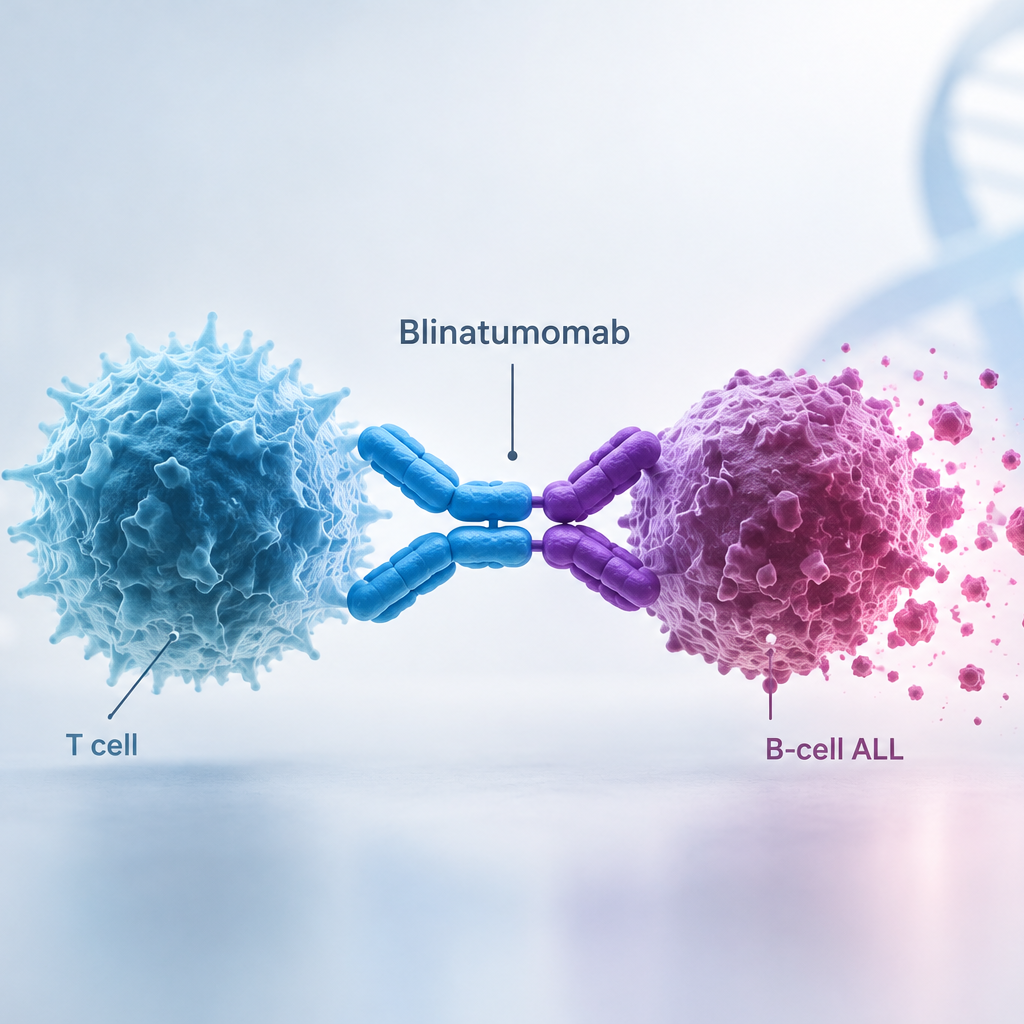
Blinatumomab is a CD19-directed bispecific T-cell engager that brings CD3-positive T cells into contact with CD19-positive B cells, promoting T-cell-mediated killing of malignant B-lineage cells.
The findings are clinically relevant because intensive chemotherapy remains associated with substantial infectious and other toxicities in pediatric ALL. In this study, replacing two chemotherapy cycles with blinatumomab was associated with both higher event-free survival and a markedly lower incidence of treatment-related infections.
The investigators concluded that replacing two cycles of highly toxic conventional chemotherapy with blinatumomab resulted in a significantly greater percentage of children remaining event-free at four years.
The study was conducted under the AIEOP-BFM ALL 2017 protocol and was funded by Deutsche Krebshilfe and other organizations. Trial identifiers include EudraCT 2016-001935-12, EU Clinical Trials 2023-509856-32-00, and ClinicalTrials.gov NCT03643276.
Reference
Martin Schrappe, M.D et al, Blinatumomab for Replacing Chemotherapy in Pediatric Acute Lymphoblastic Leukemia, N Engl J Med 2026;395:1075-1089, https://www.nejm.org/doi/10.1056/NEJMoa2604166
Treatment Protocol for Children and Adolescents With Acute Lymphoblastic Leukemia – AIEOP-BFM ALL 2017, ClinicalTrials.gov ID NCT03643276
About the Writer
Anshu Gupta (LinkedIn) is a PharmD professional and healthcare writer with interests in clinical research, pharmacovigilance, regulatory affairs, and medical writing. She has presented research at academic conferences and completed certifications in Good Clinical Practice (GCP), ICH-GCP, and drug safety. Passionate about clinical trials and evidence-based medicine, she is committed to translating scientific evidence into accurate, reliable, and accessible healthcare content.