
FDA approves Aqneursa (levacetylleucine) for ataxia in adults and children with ataxia-telangiectasia, based on improved fSARA scores.
Written By: Mayuresh Salvi, PharmD
Reviewed By: Pharmacally Editorial Team
The U.S. Food and Drug Administration has approved Aqneursa (levacetylleucine) oral suspension to treat ataxia in adults and pediatric patients with ataxia-telangiectasia (A-T) who weigh at least 15 kg. The decision establishes the first FDA-approved treatment specifically for ataxia associated with A-T, expanding the use of levacetylleucine beyond its existing indication in Niemann-Pick disease type C.
First Approved Treatment for A-T-Associated Ataxia
A-T is a rare inherited neurodegenerative disorder caused by pathogenic variants in the ATM gene, which plays a central role in DNA damage response and cellular repair. The disorder typically emerges during early childhood and progressively impairs balance, gait, coordination, and speech.
Patients can also develop telangiectasias, immune dysfunction, recurrent infections, and an increased risk of malignancies. There is currently no cure for A-T, and treatment options for its progressive neurological manifestations have remained limited.
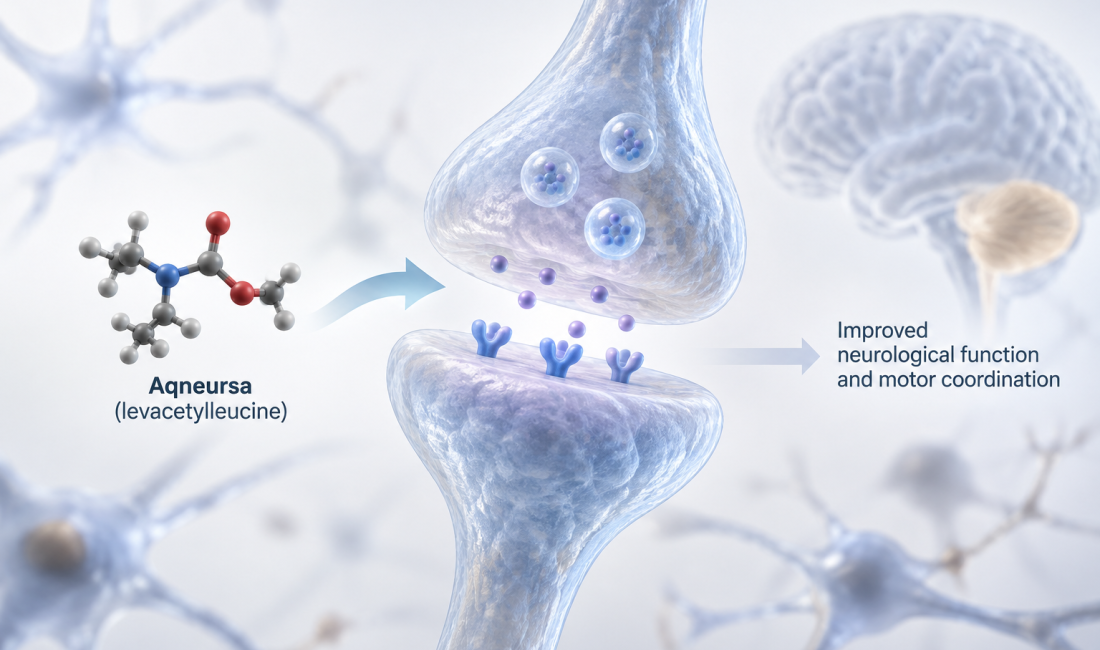
Aqneursa contains levacetylleucine, an orally administered modified amino acid. Its precise mechanism in A-T-associated ataxia has not been fully established, but clinical development has focused on improving neurological function and motor coordination.
Phase 2 Study Demonstrated Functional Improvement
The FDA based the approval on a Phase 3 randomized, double-blind, placebo-controlled, two-period crossover study (NCT06673056) involving 73 patients aged 4 years and older with confirmed ataxia-telangiectasia.
Participants received Aqneursa followed by placebo, or placebo followed by Aqneursa. Each treatment period lasted 12 weeks. The study included 26 adults and 47 pediatric patients, with a median age of 13 years and an age range of 4 to 50 years. Overall, 70 patients, or 96%, completed the study.
Researchers evaluated efficacy using the functional Scale for Assessment and Rating of Ataxia (fSARA), which measures neurological functions including gait, sitting, stance, and speech. Scores range from 0, representing the best neurological status, to 16, representing the most severe impairment.
Patients demonstrated better fSARA scores while receiving Aqneursa than during placebo treatment, indicating an improvement in neurological function.
Safety Profile
No contraindications were identified for Aqneursa. However, the FDA noted that the drug may cause fetal harm based on animal reproductive studies.
The most common adverse reactions reported in patients with A-T were falls, skin lacerations, and urinary tract infections.
Aqneursa also has clinically relevant drug-interaction considerations. Concomitant use with N-acetyl-DL-leucine should be avoided. Patients receiving P-glycoprotein (P-gp) substrates should also undergo more frequent monitoring for adverse reactions associated with those medications.
Regulatory Significance and Next Steps
Aqneursa previously received FDA approval in 2024 for the treatment of neurological manifestations associated with Niemann-Pick disease type C, giving levacetylleucine an established regulatory history in a separate rare neurological disorder.
For the A-T indication, the FDA granted both Orphan Drug designation and Priority Review. The approval was granted to IntraBio Inc.
The decision adds a new pharmacologic option for a population with a rare, progressive neurological disorder and establishes levacetylleucine as the first FDA-approved therapy specifically indicated for ataxia in A-T.
Reference
FDA Approves Therapy to Treat Ataxia in Patients with Ataxia-Telangiectasia, a Rare Genetic Disorder, Food and Drug Administration, 18 September 2026
A Pivotal Study of N-Acetyl-L-Leucine on Ataxia-Telangiectasia (A-T), ClinicalTrials.gov ID NCT06673056

About the Writer
Mayuresh Sunil Salvi (Linkedin) is a PharmD professional and healthcare writer with a strong interest in pharmacovigilance, drug safety, and emerging medical research. He is passionate about exploring new drug discoveries, clinical research, and advances in evidence-based medicine. His interests also include ward rounds, prescription audits, and treatment analysis to support rational pharmacotherapy and improved patient care.