
Owkin licenses its K Pro AI Scientist and multimodal patient data to Boehringer Ingelheim to support drug discovery across oncology and immunology.
Written By: Khushi Patel, PharmD
Reviewed By: Pharmacally Editorial Team
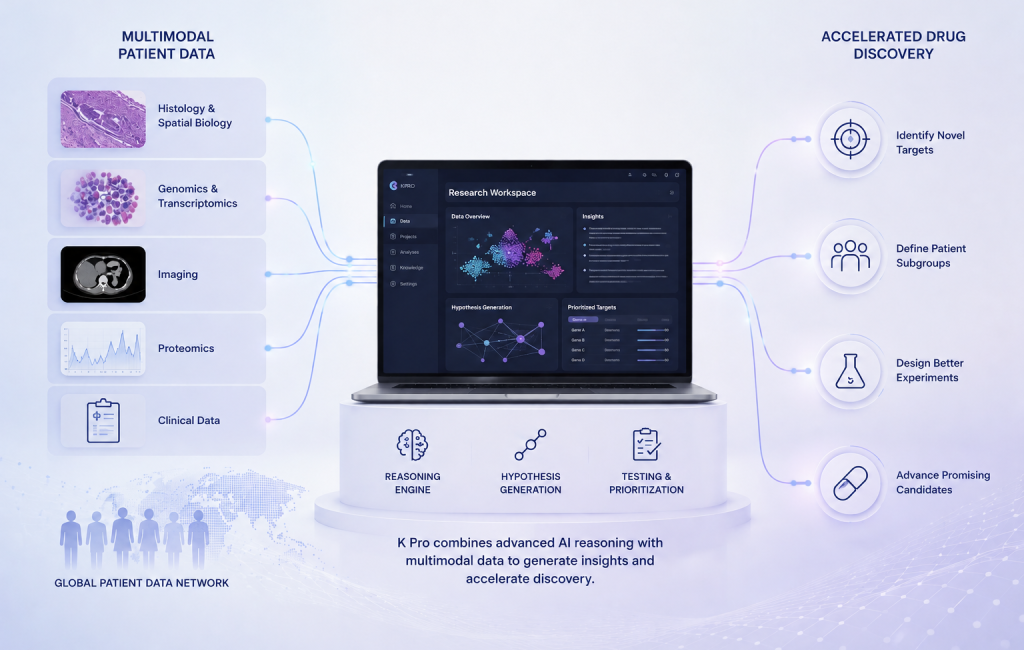
Owkin will license multimodal oncology data to Boehringer Ingelheim and generate new multimodal datasets in immunology through its global patient data network. The companies will use these datasets to support target discovery and research across multiple disease areas.
The collaboration combines large-scale patient data with K Pro, an AI Scientist that allows researchers to interrogate datasets and conduct reproducible analyses within a single environment. Its reasoning capabilities support human-led investigations as well as autonomous research campaigns that generate, test and prioritize hypotheses.
Multimodal datasets can integrate different layers of patient biology, including molecular, imaging and spatial information. Combining these data types can provide a more detailed view of disease biology than analyzing individual data modalities in isolation.
Partnership builds on 2025 oncology pilot
The agreement follows an initial pilot between the companies in 2025. During that work, Owkin used its MOSAIC dataset to generate detailed spatial insights into the tumor microenvironment surrounding a gene target.
Spatial analysis can help researchers determine how tumor cells interact with surrounding immune and stromal cells and how those relationships vary across tissue. Such information may help identify biologically relevant targets and patient subgroups for further investigation.
The new agreement broadens the scope beyond the initial oncology work by adding licensed oncology data and newly generated immunology data. Financial terms and specific drug programs covered by the agreement were not disclosed in the provided announcement.
K Pro adds reasoning to data analysis
Boehringer Ingelheim teams will access the multimodal datasets through K Pro, allowing researchers to analyze patient data and reproduce their investigations within the same environment.
Rather than functioning solely as a data-analysis tool, the platform is intended to support iterative research workflows. Researchers can use it to formulate hypotheses, evaluate evidence and prioritize findings for further experimental or clinical investigation.
The approach reflects a broader effort across biopharma to combine artificial intelligence with increasingly complex patient datasets to improve target identification and biological understanding before programs enter later-stage development.
Owkin sees multimodal data as a key development driver
Thomas Clozel, MD, co-founder and CEO of Owkin, said the agreement illustrates the potential of AI and deep patient datasets to support data-driven pharmaceutical research.
He highlighted access to multimodal patient data and AI systems capable of reasoning across those datasets as important components of future drug development.
Path Forward
The collaboration will now extend the companies’ work across oncology and immunology, with Boehringer Ingelheim gaining access to licensed oncology datasets and newly generated immunology data through K Pro.
The announcement did not provide specific development timelines, clinical programs, regulatory milestones or drug candidates associated with the agreement. Its near-term value will therefore depend on whether the combined platform and datasets generate validated biological hypotheses that can advance into target discovery and subsequent drug-development programs.
Reference

About the Writer
Khushi Patel is a Pharm.D (Linkedin) professional with a strong foundation in clinical pharmacy, patient-centered care, regulatory affairs, and pharmacovigilance, with published work on Brugada syndrome.
Her interests include regulatory affairs, pharmacovigilance, guideline integration, multimodal therapy, pharmacogenomics, and antibiogram utilization, with a focus on evidence-based clinical decision-making and medication safety.
As a Pharmacally healthcare writer, she translates clinical and scientific evidence into clear, accurate, and clinically relevant healthcare content, while continuously developing her expertise in evolving pharmacy practice.