
Zanidatamab plus chemotherapy significantly improved overall survival in HER2-positive gastroesophageal cancer in the Phase 3 HERIZON-GEA-01 trial.
Written By: Meghana Jinka, PharmD
Reviewed By: Pharmacally Editorial Team
BeOne Medicines has reported positive topline results from the second interim analysis of the Phase 3 HERIZON-GEA-01 trial (NCT05152147), strengthening the clinical evidence for zanidatamab (ZIIHERA) in first-line HER2-positive gastroesophageal adenocarcinoma (GEA). ZIIHERA combined with chemotherapy produced a statistically significant and clinically meaningful improvement in overall survival (OS) versus trastuzumab plus chemotherapy, meeting the study’s remaining primary endpoint.
The analysis also provided longer follow-up for the three-drug regimen of tislelizumab (TEVIMBRA), zanidatamab, and chemotherapy. The regimen showed an improved OS hazard ratio compared with the first interim analysis, with continued durable outcomes and a generally manageable safety profile.
Dual HER2 Targeting with Immunotherapy
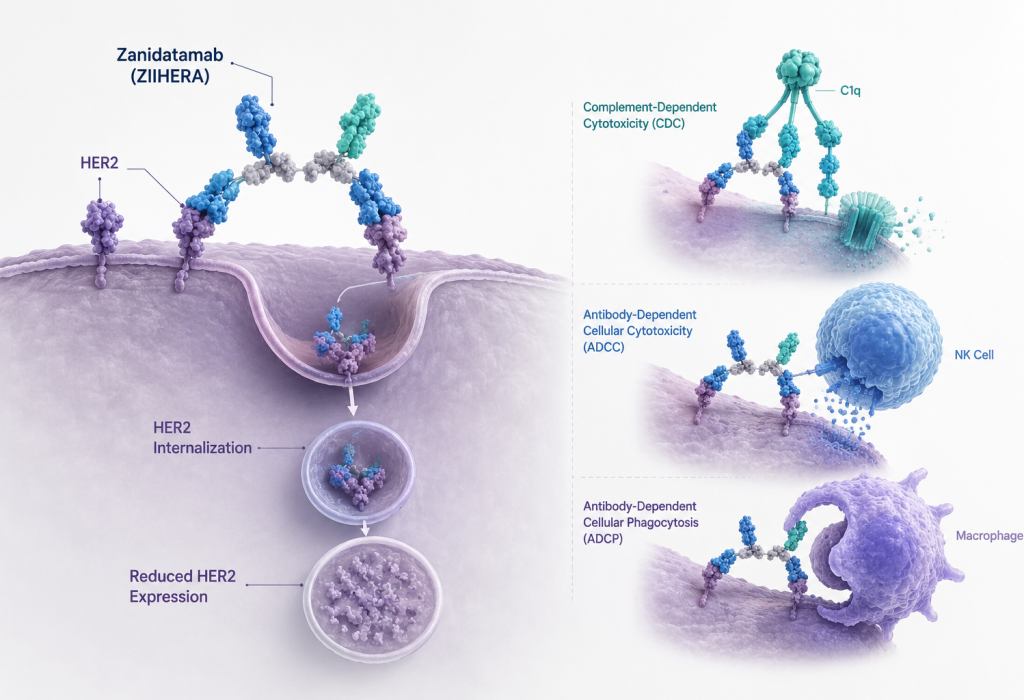
HER2-positive GEA remains an aggressive cancer with limited long-term survival in the advanced setting. Zanidatamab takes a different approach to HER2 blockade from trastuzumab by binding two distinct extracellular sites on the HER2 receptor.
This bispecific antibody promotes HER2 internalization and reduces receptor expression on tumor cells. It also activates immune-mediated mechanisms including complement-dependent cytotoxicity, antibody-dependent cellular cytotoxicity, and antibody-dependent cellular phagocytosis.
Tislelizumab adds PD-1 checkpoint inhibition to the regimen, providing an additional mechanism for stimulating an antitumor immune response. The combination therefore integrates HER2-directed therapy with immune checkpoint blockade and chemotherapy.
Phase 3 Trial Demonstrates Survival Benefit
HERIZON-GEA-01 randomized 914 patients across more than 30 countries. Participants had previously untreated, unresectable locally advanced, recurrent, or metastatic HER2-positive GEA, including gastric, gastroesophageal junction, and esophageal adenocarcinomas. HER2 positivity was defined as IHC 3+ or IHC 2+ with ISH positivity by central assessment.
Patients were assigned to three first-line regimens: ZIIHERA plus chemotherapy and TEVIMBRA; ZIIHERA plus chemotherapy; or trastuzumab plus chemotherapy. The chemotherapy backbone consisted of either capecitabine plus oxaliplatin (CAPOX) or 5-fluorouracil plus cisplatin. The trial used progression-free survival (PFS), assessed by blinded independent central review, and OS as dual primary endpoints.
At the second interim analysis, ZIIHERA plus chemotherapy achieved a statistically significant and clinically meaningful OS improvement versus trastuzumab plus chemotherapy. BeOne did not disclose the numerical OS hazard ratio, median OS, or p-value in its topline announcement.
The findings build on the first interim analysis, when the TEVIMBRA, ZIIHERA, and chemotherapy combination met both PFS and OS endpoints. Median OS at that analysis was 26.4 months with the triplet versus 19.2 months with trastuzumab plus chemotherapy, corresponding to an OS hazard ratio of 0.72.
FDA Approval Precedes Updated Survival Data
The second interim analysis follows the U.S. Food and Drug Administration’s August 25, 2026 approval of ZIIHERA and TEVIMBRA-containing regimens for first-line treatment of adults with unresectable locally advanced or metastatic HER2-positive gastric, gastroesophageal junction, or esophageal adenocarcinoma.
The approval was based on the first interim analysis of HERIZON-GEA-01. The TEVIMBRA-containing regimen demonstrated median OS exceeding two years, with benefit observed across PD-L1 expression levels.
The overall safety profile at the second interim analysis remained consistent with previously reported data and the known safety profiles of the individual treatment components. No new safety signals emerged.
Next Data Readout
BeOne Chief Medical Officer Mark Lanasa said the latest findings provide Phase 3 evidence of statistically significant and clinically meaningful OS results across both experimental arms of HERIZON-GEA-01.
The second interim analysis results have been submitted for presentation at a major medical meeting in the fourth quarter of 2026. The detailed presentation should provide the numerical survival data underlying the latest topline findings and further define the durability of benefit with both zanidatamab-based regimens.
Zanidatamab is being developed by BeOne Medicines and Jazz Pharmaceuticals under license from Zymeworks. BeOne holds rights across Asia, excluding India and Japan, as well as Australia and New Zealand, while Jazz holds rights in other regions.
Reference

About the Writer
Meghana Jinka (LinkedIn) is a Pharm.D graduate with a strong interest in clinical pharmacy, clinical research, pharmacovigilance, and medical writing. She has developed expertise in evaluating scientific literature, interpreting clinical data, and communicating complex medical information in a clear and accessible manner. Through clinical training, patient counseling, and healthcare awareness activities, she has gained practical experience in evidence-based medicine and patient-centered care. Passionate about healthcare communication, Meghana is committed to developing accurate, engaging, and evidence-based healthcare documents that support healthcare professionals and the wider community.