
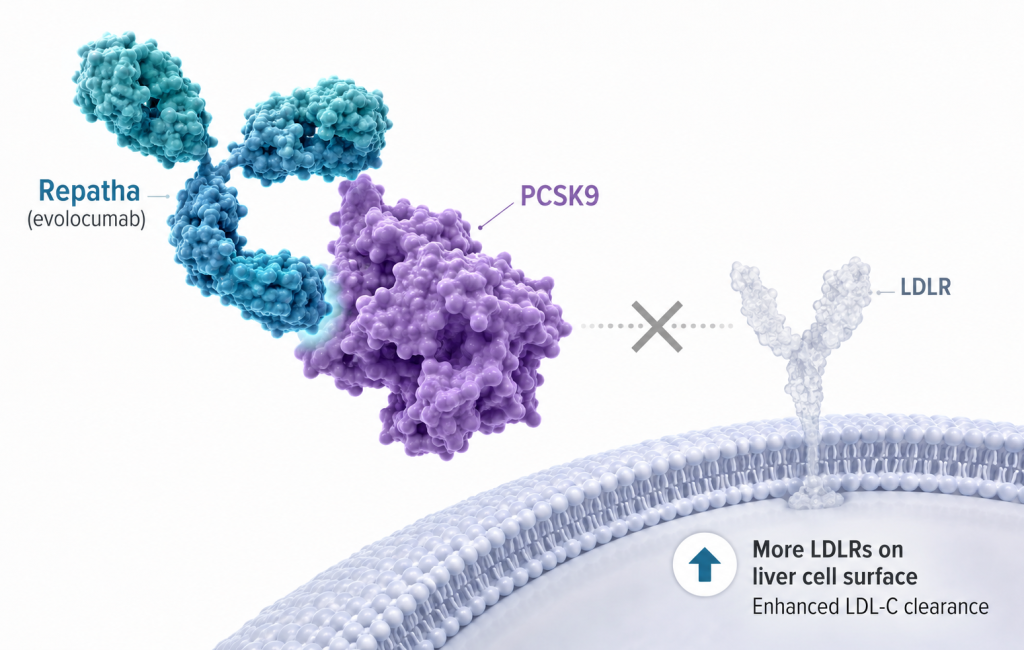
Repatha reduced all-cause mortality by 20% in high-risk patients without prior heart attack or stroke in the Phase 3 VESALIUS-CV trial.
Written By: Anamika Koshti, PharmD
Reviewed By: Pharmacally Editorial Team
Amgen has announced that a pre-specified analysis of the Phase 3 VESALIUS-CV trial (NCT03872401) found Repatha (evolocumab) reduced the risk of death by 20 percent in high-risk adults without a prior heart attack or stroke when added to statins or other LDL-cholesterol-lowering therapy. The findings were presented in a late-breaking session at the European Society of Cardiology Congress 2026 and published simultaneously in Circulation.
The results represent the first Phase 3 evidence of an all-cause mortality reduction with a PCSK9 inhibitor in this high-risk population.
Putting That Idea to the Test
VESALIUS-CV enrolled more than 12,000 patients with known atherosclerotic cardiovascular disease or high-risk diabetes who had no previous heart attack or stroke. Patients had elevated LDL-C despite treatment with the highest tolerated dose of a statin and/or ezetimibe and met prespecified lipid criteria.
Participants were randomized to receive Repatha or placebo alongside their existing lipid-lowering therapy and were followed for a median of 4.6 years.
The trial’s primary results, published in the New England Journal of Medicine, showed that Repatha reduced the risk of 3-point major adverse cardiovascular events, comprising coronary heart disease death, myocardial infarction, or ischemic stroke, by 25 percent. The risk of myocardial infarction was reduced by 36 percent.
Where the Survival Benefit Emerged
In the new mortality analysis, 434 patients receiving Repatha died from any cause compared with 539 receiving placebo. The estimated 5-year all-cause mortality was 7.9 percent with Repatha versus 9.7 percent with placebo, corresponding to a hazard ratio of 0.80 (95% CI, 0.70-0.91).
Cardiovascular mortality was also lower with Repatha, with a hazard ratio of 0.79. The mortality benefit began to emerge after approximately 1.5 years of treatment and continued through the 4.6-year median follow-up.
However, mortality was evaluated as a prespecified secondary endpoint within the trial’s statistical testing hierarchy. Because the preceding coronary heart disease death endpoint did not reach statistical significance, the cardiovascular and all-cause mortality findings should be interpreted as exploratory rather than as confirmatory efficacy endpoints.
Separate analyses provided additional evidence of benefit. Repatha reduced the risk of a first myocardial infarction, with the effect becoming apparent as early as six months after treatment initiation. Another analysis found reductions in first, subsequent, and total cardiovascular events, with subsequent events prevented nearly twice as often as first events.
Treatment Gaps Remain
Alongside the VESALIUS-CV findings, Amgen presented two global real-world analyses examining lipid management.
One study found that patients with coronary artery disease but no prior heart attack or stroke were frequently undertreated, with gaps in treatment initiation, intensification, and lipid monitoring leaving many patients above recommended LDL-C targets.
A second analysis found that high-risk women without a prior heart attack or stroke were less likely than men to receive intensive lipid-lowering therapy or reach LDL-C goals, with the disparity observed across regions.
What This Means for Patients
The VESALIUS-CV findings suggest that intensive LDL-C lowering with evolocumab may reduce cardiovascular events and mortality in appropriately selected high-risk patients before they experience a heart attack or stroke.
The results also underscore the importance of identifying and treating substantial cardiovascular risk earlier. At the same time, the real-world findings show that the potential benefits of intensive lipid lowering can be limited when high-risk patients do not receive appropriate treatment or fail to reach recommended LDL-C levels.
Reference

About the Writer
Anamika Koshti (LinkedIn) is a PharmD professional and healthcare writer with interests in clinical research, pharmacovigilance, and evidence-based medicine. She has authored peer-reviewed publications on Alzheimer’s disease and PCOS, presented research at national conferences, and gained hands-on experience in medical content development and clinical data interpretation. She is committed to translating complex medical research into accurate, accessible content for healthcare professionals and patients.