
FDA approves MIMRYLO (rusfertide) for polycythemia vera, supported by Phase 3 VERIFY data showing improved hematocrit control and reduced phlebotomy.
Written By: Khushi Patel, PharmD
Reviewed By: Pharmacally Editorial Team
The FDA has approved Takeda’s MIMRYLO (Rusfertide) for the treatment of erythrocytosis in adults with polycythemia vera (PV), introducing the first approved therapy that mimics hepcidin to regulate iron availability and red blood cell production. The decision was supported by Phase 3 VERIFY data showing substantially greater hematocrit control and lower phlebotomy requirements than placebo plus standard care.
A New Approach to Hematocrit Control
PV is a chronic blood cancer characterized by excessive red blood cell production, which increases blood viscosity and can raise the risk of thrombosis, stroke and other cardiovascular complications. Maintaining hematocrit below 45% remains the central treatment goal, but many patients continue to require frequent phlebotomies despite standard therapy.
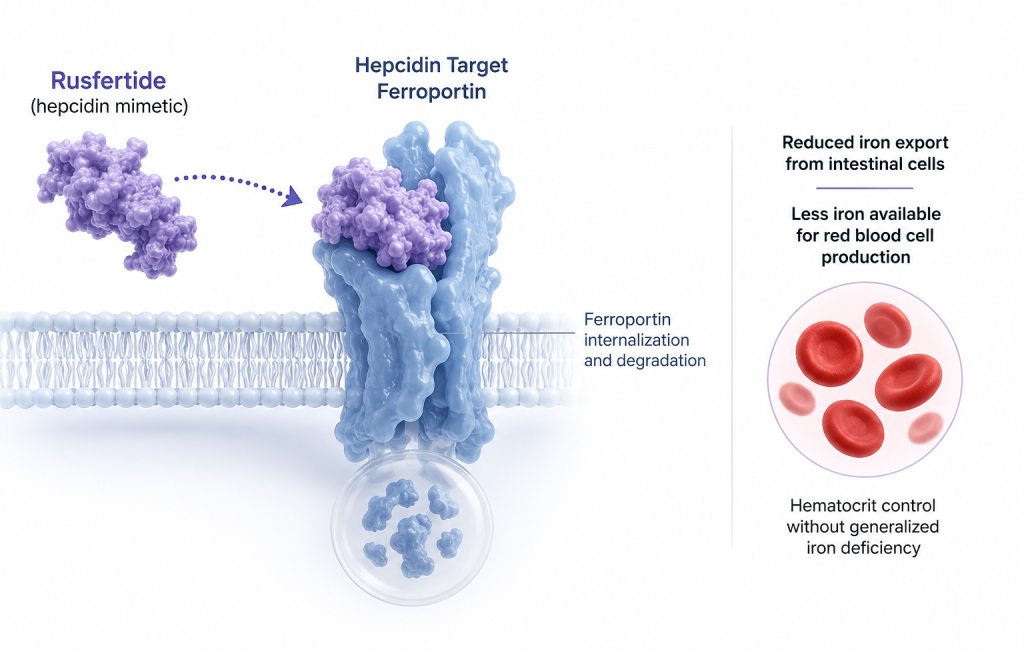
MIMRYLO addresses this biology through a different mechanism. The therapy mimics hepcidin a master regulatory hormone of iron homeostasis to restrict the iron supply required for red blood cell synthesis without inducing generalized iron deficiency. By controlling iron availability, rusfertide reduces the substrate available for excessive erythropoiesis and maintain hematocrit control. The FDA-approved regimen starts at 19 mg administered subcutaneously once weekly, with dose titration to maintain hematocrit below 45%.
VERIFY Shows Strong Hematocrit and Phlebotomy Control
The approval was based on the global, randomized, double-blind, placebo-controlled Phase 3 VERIFY trial (NCT05210790), which enrolled 293 adults with PV who required frequent phlebotomies despite standard-of-care treatment. Patients received once-weekly MIMRYLO or placebo alongside existing therapy.
During Weeks 20-32, 76.9% of patients receiving MIMRYLO achieved a clinical response versus 32.9% with placebo, a statistically significant difference (P<0.0001). The primary endpoint assessed whether patients remained free of phlebotomy eligibility during this period.
MIMRYLO also reduced phlebotomy burden, with a mean of 0.5 procedures per patient versus 1.8 for placebo through Week 32 (P<0.0001). Only 27% of MIMRYLO-treated patients required phlebotomy compared with 78% of those receiving placebo. Hematocrit remained below 45% in 62.6% versus 14.4%, respectively (P<0.0001). Patient-reported fatigue and overall symptom burden also improved significantly.
Safety Profile Includes Thrombocytosis Warning
MIMRYLO was generally well tolerated. In the pivotal study, injection-site reactions and anemia were among the most common adverse events. The prescribing information reports injection-site reactions in 56% of treated patients and anemia in 16%.
The label warns that MIMRYLO may cause new or worsening thrombocytosis, requiring CBC monitoring every two to four weeks after treatment initiation and during dose modifications. Injection-site reactions, including Grade 3 events, can also occur. MIMRYLO carries an embryo-fetal toxicity warning based on animal reproductive studies; patients who become pregnant should discontinue treatment. Pregnancy testing is recommended before initiation, and effective contraception is advised during treatment and for at least 30 days after the final dose.
Protagonist Partnership and Next Steps
The approval also advances a long-running collaboration between Takeda and Protagonist Therapeutics. Protagonist discovered rusfertide and led its development through Phase 3, while the companies entered a worldwide license and collaboration agreement in 2024. Takeda now holds exclusive global development and commercialization rights.
The VERIFY open-label extension remains ongoing, with additional findings expected at future medical meetings. The FDA had granted Priority Review to Takeda’s NDA for rusfertide, reflecting the therapy’s potential to address an unmet need in polycythemia vera. Takeda is also pursuing regulatory approvals outside the U.S., with the goal of expanding access to MIMRYLO internationally.
Reference

About the Writer
Khushi Patel is a Pharm.D (Linkedin) professional with a strong foundation in clinical pharmacy, patient-centered care, regulatory affairs, and pharmacovigilance, with published work on Brugada syndrome.
Her interests include regulatory affairs, pharmacovigilance, guideline integration, multimodal therapy, pharmacogenomics, and antibiogram utilization, with a focus on evidence-based clinical decision-making and medication safety.
As a Pharmacally healthcare writer, she translates clinical and scientific evidence into clear, accurate, and clinically relevant healthcare content, while continuously developing her expertise in evolving pharmacy practice.