
The FDA approved Stelara for moderately to severely active ulcerative colitis in children aged 2 years and older, expanding its pediatric IBD use
Written By: Rishabh Sonawane, BPharm
Reviewed By: Pharmacally Editorial Team
The FDA has approved Stelara (ustekinumab) for children aged 2 years and older with moderately to severely active ulcerative colitis (UC), extending its pediatric inflammatory bowel disease (IBD) use after the April 15, 2026 approval for pediatric Crohn’s disease (CD). The decision makes Stelara the first approved therapeutic monoclonal antibody that does not target human tumor necrosis factor alpha (TNFα) for both major forms of pediatric IBD.
Expanding Pediatric IBD Treatment
Janssen Biotech, Inc. received the approval based on established efficacy data from adult UC studies, together with pediatric pharmacokinetic, efficacy, and safety evidence. The UC indication also carries Orphan Drug Designation.
The April CD approval and the latest UC decision give Stelara an FDA-approved role across the two principal forms of pediatric IBD, providing clinicians with a non-TNFα treatment option for children requiring advanced therapy.
Targeting IL-12 and IL-23
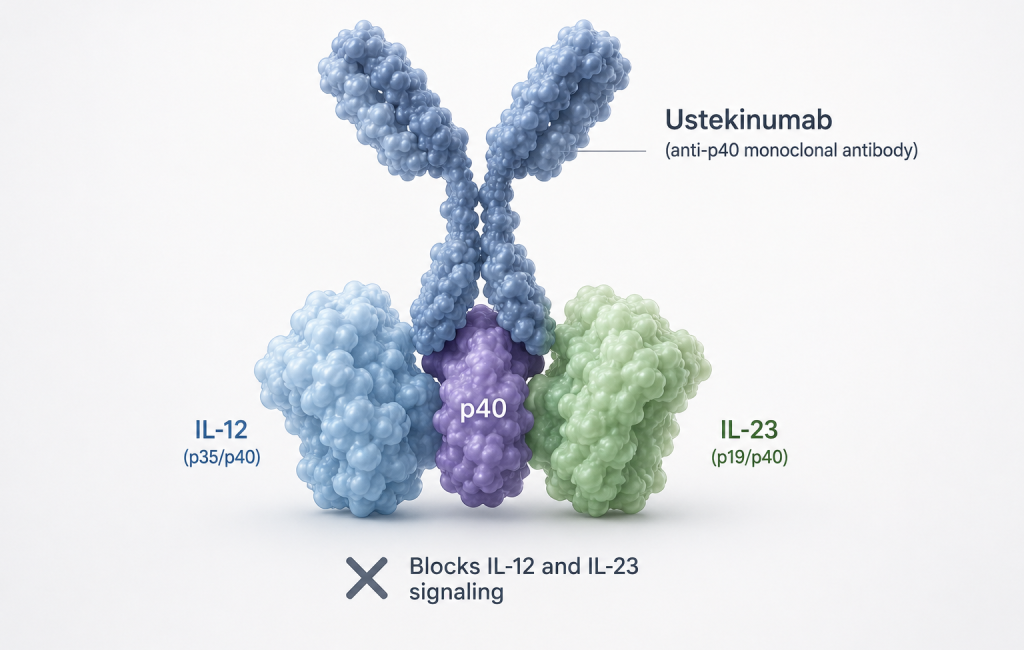
Ustekinumab is a fully human monoclonal antibody that targets the p40 subunit shared by interleukin-12 (IL-12) and interleukin-23 (IL-23), cytokines that contribute to inflammatory signaling in IBD.
Pediatric IBD causes persistent inflammation in the gastrointestinal tract and can affect growth and development. UC primarily affects the innermost lining of the colon and rectum, causing symptoms such as bleeding, diarrhea, and bowel urgency. CD can affect any part of the digestive tract and may cause abdominal pain, diarrhea, poor growth, weight loss, intestinal blockages, and fistulas.
IV Induction Followed by Subcutaneous Maintenance
For IBD, Stelara treatment begins with a single weight-based intravenous induction infusion, followed by subcutaneous maintenance dosing 8 weeks later and every 8 weeks thereafter.
The distinction is clinically important because Stelara is often described as an injection, while its IBD treatment regimen begins with an intravenous induction dose before transitioning to subcutaneous maintenance therapy.
Evidence Supporting the UC Approval
The FDA’s decision drew on multiple sources of evidence. Adequate and well-controlled studies in adults with UC (NCT02407236) provided efficacy evidence, while pediatric pharmacokinetic (NCT02968108) and safety data came from patients aged 2 to 17 years with CD (NCT04673357).
Additional UC-specific evidence came from a 52-week study involving 112 pediatric patients aged 3 to 17 years (NCT04630028). The study generated safety, efficacy, and pharmacokinetic data supporting use in pediatric UC.
Although the UC study enrolled patients starting at age 3, the FDA-approved indication extends to pediatric patients aged 2 years and older. This distinction separates the age range studied in the supporting UC trial from the broader population covered by the regulatory approval.
Pediatric Safety Profile
The most common adverse reactions reported in pediatric patients with UC receiving Stelara were nasopharyngitis, headache, abdominal pain, influenza, fever, diarrhea, sinusitis, fatigue, and nausea.
These findings add pediatric safety experience to the established clinical profile of ustekinumab and support its use in children with moderately to severely active UC.
Stelara Broadens Pediatric IBD Treatment Options
The UC approval completes Stelara’s FDA expansion into both major pediatric IBD indications. The treatment now offers a non-TNFα mechanism for children aged 2 years and older with moderately to severely active CD or UC.
The broader pediatric indication gives clinicians another biologic option when selecting therapy based on disease phenotype, previous treatment, patient characteristics, safety considerations, and the evolving treatment landscape for pediatric IBD.
Reference

About the Writer
Rishabha Sonawane, B.Pharm (LinkedIn) is healthcare writer with a strong interest in medical writing, regulatory affairs, clinical research, and AI-driven drug discovery. He has completed specialized training from the NIH and ICMR in clinical pharmacology, clinical research, and scientific writing. Passionate about evidence-based healthcare communication, he focuses on translating complex scientific research into clear, accurate, and engaging medical content.