
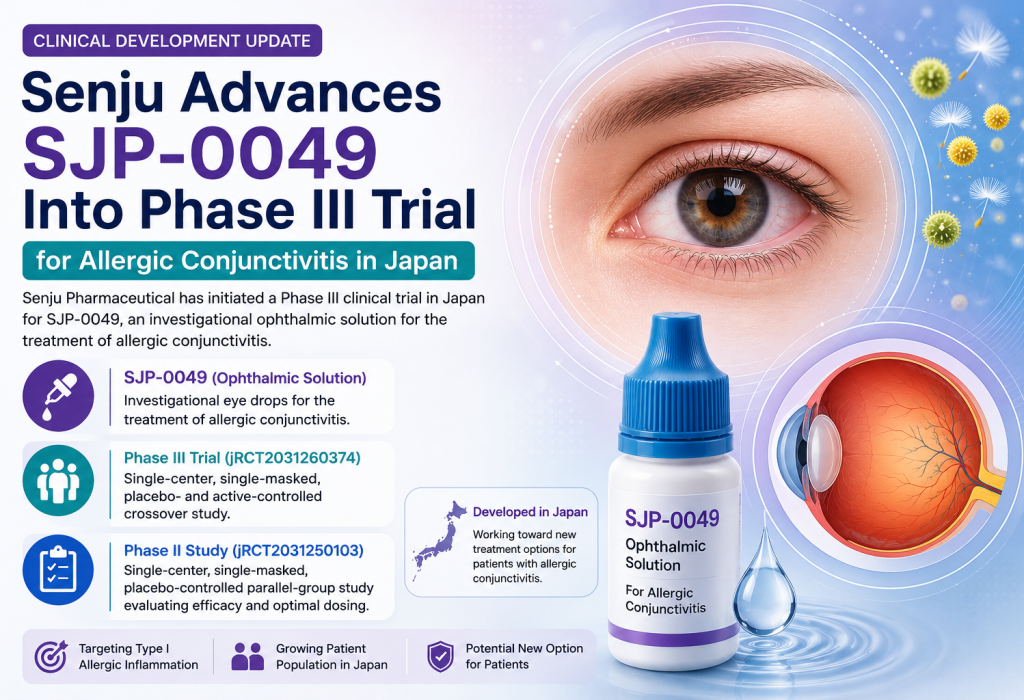
Senju has started a Phase III trial in Japan evaluating SJP-0049 ophthalmic solution for allergic conjunctivitis following earlier Phase II development.
Written By: Siddhi Bhadekar, M. Pharm (QA)
Reviewed By: Pharmacally Editorial Team
Senju Pharmaceutical has started a Phase III clinical trial in Japan evaluating SJP-0049, an investigational ophthalmic solution for allergic conjunctivitis. The late-stage program follows earlier clinical evaluation of the candidate and advances a potential new treatment option for patients with allergic eye disease.
Phase III Trial Evaluates SJP-0049 Eye Drops
The Phase III study, registered as jRCT2031260374, is a single-center, single-masked, placebo- and active-controlled crossover study evaluating SJP-0049 as an ophthalmic solution. The crossover design allows participants to receive different treatments during separate study periods, supporting within-patient comparisons of treatment effects.
Senju has not publicly reported Phase III efficacy, safety, or tolerability results. Detailed clinical outcomes from the study will therefore be important for determining whether SJP-0049 can demonstrate a clinically meaningful benefit in allergic conjunctivitis.
Phase II Study Established Earlier Clinical Evidence
The Phase III program follows a Phase II study registered as jRCT2031250103. That study used a single-center, single-masked, placebo-controlled parallel-group design and evaluated the efficacy of SJP-0049 as well as its optimal dosing.
The Phase II study provides the earlier clinical foundation for the current late-stage program. However, the available information does not establish the magnitude of any efficacy effect or provide detailed Phase II safety findings, so those outcomes should not be inferred from the trial’s progression into Phase III.
Targeting Type I Allergic Inflammation
SJP-0049 is being developed for allergic conjunctivitis, an inflammatory disease of the conjunctiva primarily mediated by Type I allergic reactions. Exposure to allergens can trigger an immune response in ocular tissues, producing symptoms such as itching, redness, tearing and ocular discomfort alongside observable conjunctival inflammation.
According to the Guidelines for Allergic Conjunctival Diseases, 3rd Edition, published by the Japanese Society of Ocular Allergology in 2021, allergic conjunctival diseases associated with antigen-induced subjective symptoms and objective findings include non-proliferative forms targeted by the current development program.
Senju noted that the number of patients with allergic conjunctivitis in Japan is increasing, highlighting continued demand for effective therapies that can control the clinical manifestations of the disease.
Compound Licensed from Tanabe Pharma
SJP-0049 is based on a compound licensed from Tanabe Pharma Corporation. Senju is advancing the candidate through clinical development in Japan with the goal of establishing the evidence required for marketing approval.
The publicly available announcement does not provide detailed information about SJP-0049’s molecular target or mechanism of action. Its clinical development therefore remains the key source of evidence for determining the candidate’s therapeutic potential.
Phase III Results Will Determine Development Path
Moving SJP-0049 into Phase III represents an important development milestone, but the candidate’s clinical value will depend on the results of the registered study. Efficacy against allergic conjunctivitis, together with safety and tolerability, will be central to the assessment.
Senju plans to continue development toward marketing approval in Japan. Results from the Phase III program should provide the next major evidence point for determining whether SJP-0049 can progress toward regulatory submission and potentially expand treatment options for patients with allergic conjunctivitis.
Reference

About the Writer
Siddhi Rajendra Bhadekar (Linkedin) is an M.Pharm professional with expertise in medical and scientific writing, literature review, publication writing, and evidence synthesis, supported by four peer-reviewed publications.
She brings working knowledge of ICH-GCP, MedDRA, pharmacovigilance, ADR/AE reporting, clinical data management, and regulatory documentation.
With experience across pharmaceutical R&D, Quality Control, and Quality Assurance, she combines scientific research skills with strong attention to accuracy and detail.
Her background in manuscript development, publication planning, and scientific communication enables her to translate complex healthcare information into clear, reliable content.