
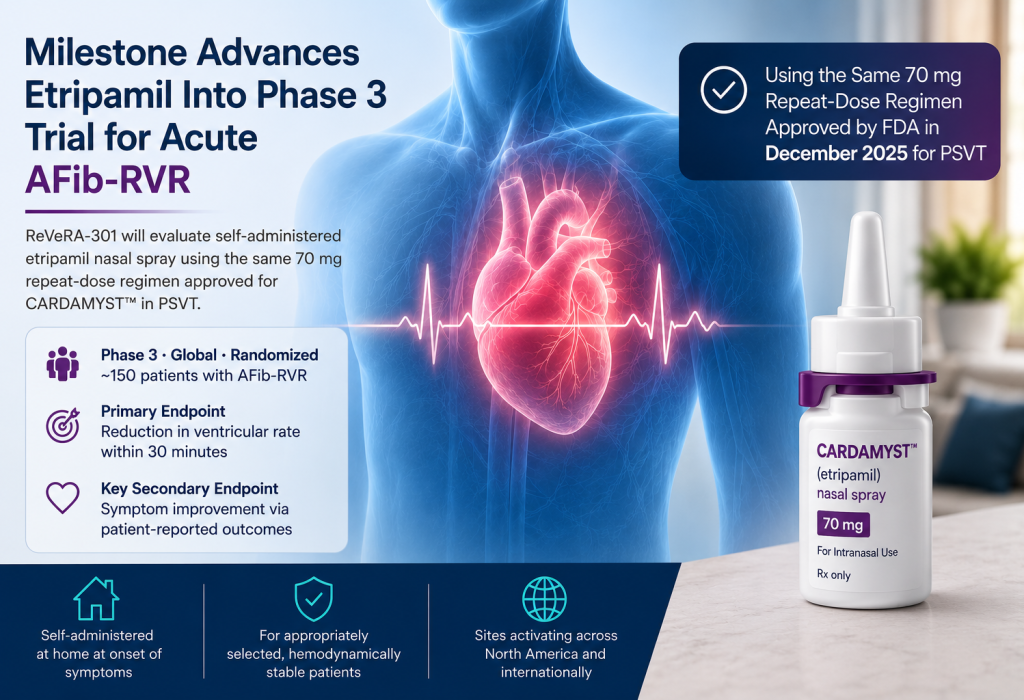
Milestone Pharmaceuticals starts Phase 3 ReVeRA-301 evaluating 70 mg etripamil nasal spray for acute atrial fibrillation with rapid ventricular rate.
Written By: Mansi Nakum, PharmD
Reviewed By: Pharmacally Editorial Team
Milestone Pharmaceuticals has enrolled the first patient in ReVeRA-301, a randomized Phase 3 trial evaluating etripamil nasal spray for acute atrial fibrillation with rapid ventricular rate (AFib-RVR). The multinational, multicenter, double-blind, placebo-controlled study is expected to enroll approximately 150 adults with symptomatic AFib-RVR.
Patients will self-administer etripamil in a medically unsupervised setting, such as at home, using the same 70 mg repeat-dose regimen used for CARDAMYST™ (etripamil) nasal spray, which received FDA approval in December 2025 for conversion of acute symptomatic paroxysmal supraventricular tachycardia (PSVT) to sinus rhythm in adults.
Etripamil Targets Rapid Ventricular Conduction
Etripamil is a fast-acting calcium channel blocker administered intranasally. By inhibiting calcium-dependent conduction through the atrioventricular node, it can slow transmission of atrial impulses to the ventricles and reduce ventricular rate.
AFib is the most common sustained cardiac arrhythmia in the United States, affecting more than 6 million people. When AFib produces a rapid ventricular rate, patients may develop palpitations, shortness of breath, weakness, and other symptoms that can prompt urgent medical evaluation.
Acute AFib-RVR management often requires emergency department treatment with intravenous beta blockers, intravenous calcium channel blockers, or electrical cardioversion. A self-administered option could potentially provide an alternative for appropriately selected patients experiencing acute episodes outside the hospital.
ReVeRA-301 Measures Ventricular Rate Reduction at 30 Minutes
ReVeRA-301 (NCT06716021) will enroll patients with documented symptomatic AFib and a ventricular rate of at least 110 beats per minute.
The primary endpoint is reduction in ventricular rate within 30 minutes. The study will also assess symptom improvement through patient-reported outcomes as a key secondary endpoint.
The trial advances findings from ReVeRA-201 (NCT04467905), a Phase 2 randomized controlled study conducted in patients presenting to an emergency department with symptomatic AFib-RVR. A single 70 mg dose of etripamil reduced ventricular rate compared with placebo and improved both symptom relief and treatment satisfaction. The Phase 2 study reported a mean ventricular-rate reduction of 29.91 beats per minute versus placebo, with the effect emerging rapidly after administration.
Trial Population Focuses on Appropriately Selected Patients
The medically unsupervised setting is an important feature of ReVeRA-301. The study does not position self-administration as an option for every AFib-RVR episode. Trial eligibility includes documented AF with a ventricular rate of at least 110 bpm, while relevant histories of hemodynamic instability and severe heart failure are among the factors addressed in the study criteria.
This population is intended to allow investigators to evaluate whether rapid ventricular-rate control can be achieved outside direct medical supervision while maintaining an appropriate safety framework.
Clinical and Economic Burden Remains High
Market research cited by Milestone indicates that 30% to 40% of patients with AFib experience at least one RVR episode each year requiring urgent medical attention. AFib-related emergency care also contributes substantially to healthcare utilization and costs.
The company cites estimates placing incremental annual U.S. healthcare costs associated with AFib at approximately $6,000 to $28,000 per patient, depending on the population and methodology. The American Heart Association has projected that the overall U.S. economic burden of AFib could increase from $59.4 billion in 2020 to $174.8 billion by 2050.
Regulatory Pathway and Next Steps
Milestone is pursuing a single-study supplemental new drug application pathway for AFib-RVR, leveraging the existing etripamil safety database and the results of ReVeRA-301. The company is activating clinical sites across North America and internationally for the event-driven global Phase 3 study.
If ReVeRA-301 demonstrates clinically meaningful ventricular-rate reduction and symptom improvement with an acceptable safety profile, the findings could support a supplemental indication for etripamil in acute AFib-RVR. The Phase 3 program therefore represents the next major test of whether a therapy already approved for PSVT can extend the self-administered treatment model to a broader acute arrhythmia setting.
Reference

About the Writer
Mansi Nakum (Linkedin) is a Pharm.D professional with a strong foundation in clinical pharmacy, evidence-based healthcare writing, and clinical data interpretation.
She has published work on Brugada syndrome and has a keen interest in guideline integration, multimodal therapy, pharmacogenomics, and antibiogram utilization.
As a healthcare writer, she focuses on translating clinical evidence into clear, accurate, and clinically relevant content, while continuously developing her expertise in evolving pharmacy practice.