
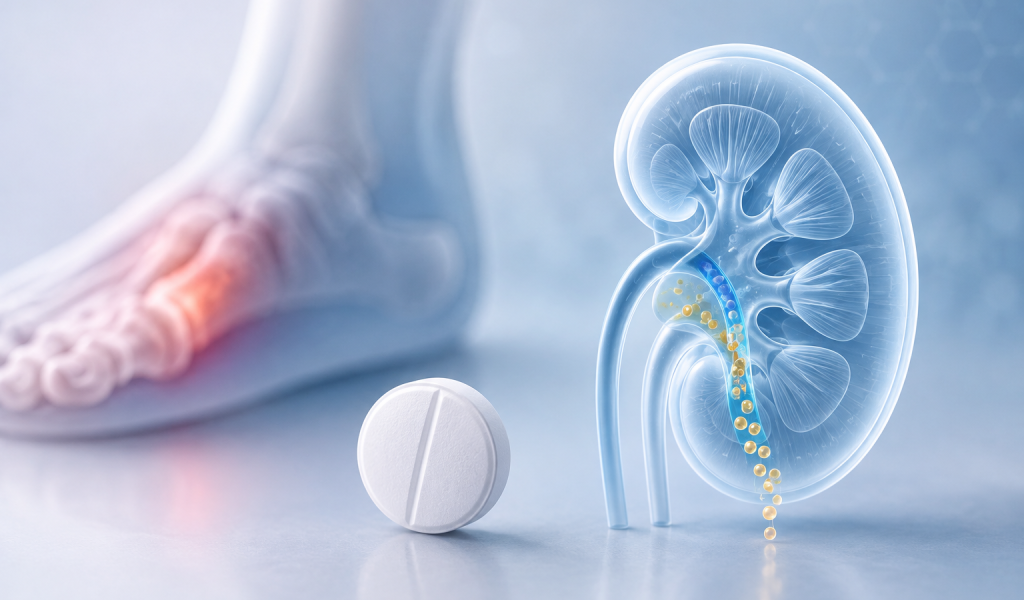
JW Pharmaceutical reports epaminurad 6 mg was statistically superior to febuxostat 40 mg for serum uric acid control in a Phase 3 gout trial.
Written By: Mayuresh Salvi, PharmD
Reviewed By: Pharmacally Editorial Team
JW Pharmaceutical has reported positive topline results from the Phase 3 development program of epaminurad (URC102), an investigational oral uricosuric agent for hyperuricemia and gout. According to the company, epaminurad 6 mg demonstrated statistical superiority over febuxostat 40 mg for achieving the prespecified serum uric acid (sUA) target, with a broadly comparable safety profile.
Phase 3 EPIC Study
The EPIC study (NCT05815901) is a randomized, double-blind, active-controlled Phase 3 trial evaluating epaminurad against febuxostat in patients with gout. The Trial lists 612 participants enrolled in the study. Patients were randomized to epaminurad 6 mg or 9 mg, or febuxostat 40 mg or 80 mg. The primary endpoint was the proportion of patients achieving sUA below 6 mg/dL at the last three measurements during the main study period. The study also assessed safety through Week 52.
JW Pharmaceutical previously reported that the multinational program was conducted across South Korea, Taiwan, Thailand, Malaysia and Singapore. The company completed the study in April 2026.
6 mg Dose Demonstrates Superiority
According to JW Pharmaceutical’s topline analysis, 50.0% of patients receiving epaminurad 6 mg achieved the primary endpoint, compared with 38.3% of patients receiving febuxostat 40 mg.
The reported treatment difference was 12.0 percentage points, with a 95% confidence interval of 1.26 to 22.6 percentage points. The result met the predefined non-inferiority criterion and subsequently demonstrated statistical superiority over febuxostat 40 mg.
The finding is important because it demonstrates superiority against an active urate-lowering comparator rather than placebo. However, the endpoint was biochemical, measuring achievement of the sUA target rather than clinical outcomes such as gout flares, joint symptoms or quality of life.
9 mg Dose Does Not Establish Non-Inferiority
The higher 9 mg dose produced a different result. The sUA target was achieved by 59.6% of patients receiving epaminurad 9 mg compared with 63.3% receiving febuxostat 80 mg.
Based on the reported patient numbers, this represented an observed difference of approximately 3.7 percentage points in favor of febuxostat. The 9 mg dose therefore did not meet the predefined non-inferiority criterion.
The contrasting results between the two dose comparisons will be relevant to JW Pharmaceutical’s future dose-selection and development strategy.
Safety Profile Broadly Comparable
JW Pharmaceutical reported that treatment-emergent adverse events were broadly comparable between epaminurad and febuxostat. Adverse drug reactions, serious adverse events, serious adverse drug reactions and adverse events of special interest were also reported at similar levels.
No drug-related deaths were reported during the trial period, according to the company.
These findings support further regulatory development, although the complete safety assessment will depend on the finalized clinical dataset and longer-term follow-up.
hURAT1 Inhibition Provides a Different Approach
Epaminurad is a selective inhibitor of human urate transporter 1 (hURAT1), a renal transporter involved in uric acid reabsorption. By inhibiting hURAT1, epaminurad is designed to increase urinary uric acid excretion and lower circulating uric acid concentrations.
This mechanism differs from xanthine oxidase inhibitors such as febuxostat and allopurinol, which primarily reduce uric acid production.
South Korean NDA Planned for 2027
Based on the Phase 3 findings, JW Pharmaceutical plans to pursue a New Drug Application in South Korea, targeting regulatory approval in 2027. The company is also pursuing potential out-licensing opportunities to support the international development of epaminurad.
The 2027 timeline represents the company’s current development target and should not be interpreted as a guaranteed approval date.
Future Direction
The Phase 3 results strengthen the development case for epaminurad 6 mg by showing statistical superiority over febuxostat 40 mg on the prespecified sUA endpoint.
However, the detailed efficacy and safety findings currently available are company-reported topline results. ClinicalTrials.gov confirms the Phase 3 study design, enrollment and endpoints but does not currently contain a posted results dataset, and a peer-reviewed publication of the Phase 3 findings is not yet available.
The next important milestones will be completion of the full clinical analysis, South Korean NDA submission and regulatory review. Longer-term safety, durability of urate lowering and clinical outcomes will determine whether epaminurad can establish a differentiated role in gout treatment.
Reference
JW Pharmaceutical’s Gout Drug Passes Phase 3 at Lower Dose – Seoul Economic Daily

About the Writer
Mayuresh Sunil Salvi (Linkedin) is a PharmD professional and healthcare writer with a strong interest in pharmacovigilance, drug safety, and emerging medical research. He is passionate about exploring new drug discoveries, clinical research, and advances in evidence-based medicine. His interests also include ward rounds, prescription audits, and treatment analysis to support rational pharmacotherapy and improved patient care.