
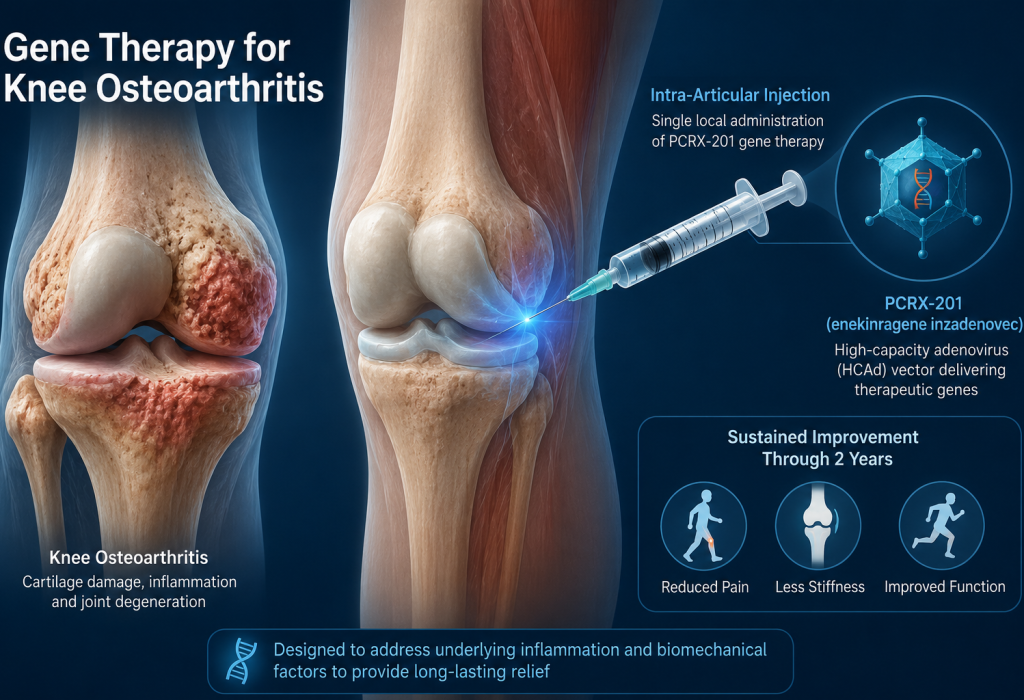
Pacira’s gene therapy PCRX-201 showed sustained pain, stiffness, and function improvements with favorable safety through two years in a Phase 1 knee osteoarthritis trial.
Written By: Pavan Kumar Chikkula, PharmD
Reviewed By: Pharmacally Editorial Team
Pacira BioSciences has reported positive two-year Phase 1 results for its investigational gene therapy PCRX-201 (enekinragene inzadenovec) in patients with moderate-to-severe knee osteoarthritis (OA). The findings, published in Annals of the Rheumatic Diseases, showed that a single intra-articular injection of PCRX-201 was well tolerated and produced sustained improvements in exploratory measures of pain, stiffness, and physical function through 104 weeks among patients who remained in follow-up.
The results strengthen the clinical rationale for advancing PCRX-201 into later-stage development as a potential long-acting treatment for knee OA, an area where current injectable therapies typically provide symptom relief for only a few months.
Gene Therapy Targets the Underlying Biology of Knee Osteoarthritis
PCRX-201 is an investigational locally administered gene therapy built on Pacira’s proprietary high-capacity adenovirus (HCAd) vector platform. Unlike conventional symptomatic treatments, the therapy is intended to address both the inflammatory and biomechanical processes that drive progressive cartilage degeneration in knee osteoarthritis.
The HCAd platform enables efficient delivery of therapeutic genes while carrying substantially larger DNA payloads than conventional adeno-associated virus (AAV) vectors. The platform also supports local administration, potential repeat dosing, and scalable manufacturing using relatively low vector doses.
Knee osteoarthritis affects more than 15 million people in the United States and remains a leading cause of chronic pain, disability, and reduced quality of life. Current non-surgical treatment options often provide only temporary symptom control.
Phase 1 Trial Demonstrated Durable Safety and Clinical Improvement
The open-label Phase 1 study enrolled 72 adults aged 30 to 80 years with symptomatic, radiographically confirmed moderate-to-severe knee OA.
The trial consisted of two sequential parts:
- Part 1: Thirty-six participants received a single intra-articular injection of PCRX-201 at low, middle, or high dose levels.
- Part 2: Another 36 participants received methylprednisolone before PCRX-201 administration to improve tolerability and evaluate whether glucocorticoid pretreatment enhanced gene transfer.
The primary endpoint evaluated safety, while secondary and exploratory endpoints included systemic biodistribution and changes in pain, stiffness, and physical function over a 104-week follow-up period.
Across dose cohorts, PCRX-201 demonstrated a favorable tolerability profile. Patients who remained in the study experienced sustained improvements in clinical outcome measures throughout the two-year follow-up. Investigators also observed that glucocorticoid pretreatment was associated with fewer joint effusion events and greater improvement in clinical outcomes, leading Pacira to incorporate this approach into its ongoing Phase 2 program.
Investigators Support Advancement into Phase 2
Lead investigator Stanley Cohen, MD, said publication in Annals of the Rheumatic Diseases underscores the scientific importance of the findings. He noted that the favorable safety profile and durable improvements across exploratory clinical measures provide strong support for continued development of PCRX-201.
Pacira Chief Medical Officer Jonathan Slonin, MD, MBA, said the two-year results reinforce the therapy’s potential to provide substantially longer-lasting clinical benefit than currently available intra-articular treatments. If confirmed in larger studies, PCRX-201 could extend therapeutic benefit beyond the typical three-to-six-month duration of existing options and potentially maintain efficacy for one year or longer following a single administration.
Phase 2 ASCEND Trial Continues Enrollment
Pacira is currently advancing PCRX-201 in the multicenter Phase 2 ASCEND trial (NCT06884865). The company recently initiated enrollment into Part B of the study and completed the transition of PCRX-201 manufacturing to a scalable commercial process.
Topline Phase 2 results remain on track for release by the end of 2026.
PCRX-201 has previously received Regenerative Medicine Advanced Therapy (RMAT) designation from the U.S. Food and Drug Administration and Advanced Therapy Medicinal Product (ATMP) designation from the European Medicines Agency, reflecting regulatory recognition of its potential in treating knee osteoarthritis.
Reference

About the Writer
Chikkula Pavan Kumar (LinkedIn), PharmD is a Doctor of Pharmacy with a keen interest in clinical pharmacy, pharmacovigilance, and evidence-based practice. In his words, he is passionate about patient safety and translating complex medical information into clear, research-driven communication.