
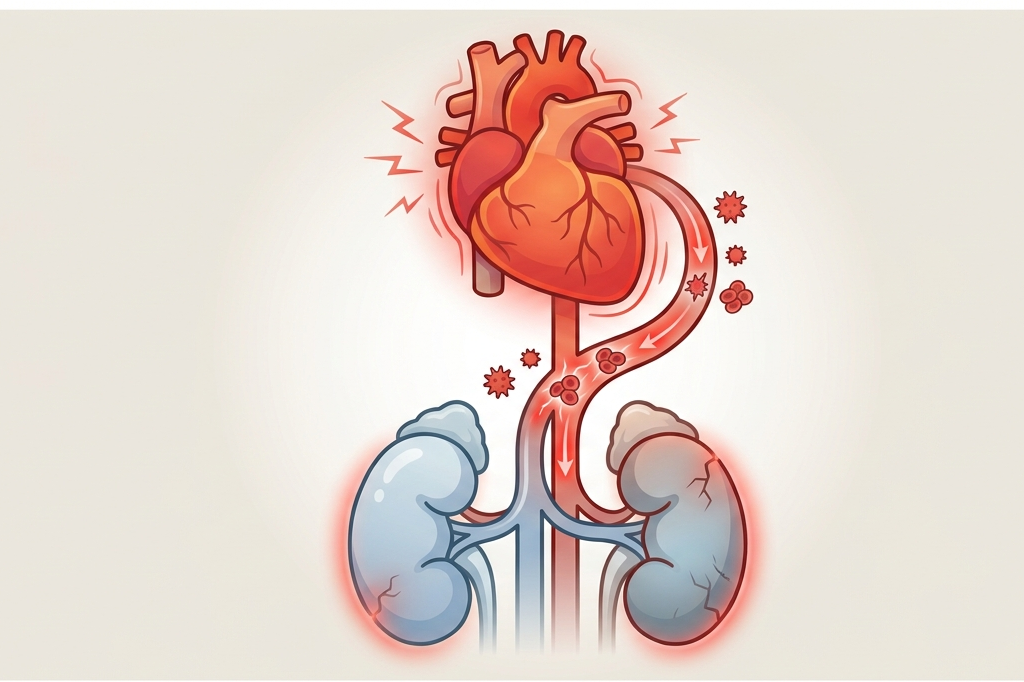
Discover how Cadrenal Therapeutics is repositioning CAD-1005 as a Phase 3-ready 12-LOX inhibitor targeting both CSA-AKI and HIT in a $1.5B+ critical care market.
Written by: Kirti Kumbhar, M. Pharm (QA)
Reviewed by: Pharmacally Editorial Team
Cadrenal Therapeutics is reshaping the development strategy for its investigational therapy, CAD-1005, following the recent failure of a competitor’s late-stage Phase 3 clinical trial in cardiac surgery-associated acute kidney injury (CSA-AKI). Rather than advancing separate development programs, the company is consolidating its Cardiac Acute Critical Care (CACC) Franchise around a dual-indication strategy that positions CAD-1005 for both heparin-induced thrombocytopenia (HIT) and CSA-AKI.
The strategic shift reflects more than a routine pipeline update. It underscores Cadrenal’s effort to respond to a changing competitive landscape in acute care, where no pharmacological therapy has yet demonstrated clear preventive efficacy for CSA-AKI despite years of clinical research. Following the discontinuation of a rival late-stage program due to lack of efficacy, the company believes its differentiated 12-lipoxygenase (12-LOX) inhibition approach may offer a novel strategy for addressing the upstream thrombo-inflammatory mechanisms involved in cardio-renal injury.
Competitor’s Phase 3 Setback Reshapes the CSA-AKI Landscape
CSA-AKI remains one of the most serious complications following major cardiac surgery, contributing to prolonged hospitalization, increased healthcare utilization, and poorer clinical outcomes. Despite multiple clinical development efforts, no pharmacological therapy has demonstrated clear preventive efficacy for the condition.
Against this backdrop, the recent discontinuation of a competitor’s Phase 3 CSA-AKI program reinforces the need for therapeutic approaches that target the underlying biological mechanisms driving disease rather than focusing solely on downstream complications.
Cadrenal estimates the U.S. market opportunity for CSA-AKI exceeds $1 billion. At the same time, the company is advancing CAD-1005 for HIT, a rare but serious immune-mediated complication of heparin therapy, creating a broader critical care strategy built around one investigational asset.
Cadrenal Consolidates CAD-1005 Into a Multi-Indication Critical Care Franchise
Rather than treating HIT and CSA-AKI as separate development programs, Cadrenal is repositioning CAD-1005 as a unified critical care platform built around a shared thrombo-inflammatory mechanism. By aligning both indications within a single Cardiac Acute Critical Care (CACC) Franchise, the company aims to leverage common hospital infrastructure, intravenous administration, and overlapping commercialization pathways while maximizing the value of a Phase 3-ready asset in a competitive landscape reshaped by a rival’s late-stage clinical setback.
The company describes CAD-1005 as a potential “Post-Operative Shield” designed to selectively inhibit 12-lipoxygenase (12-LOX), reducing platelet hyperactivation in HIT while simultaneously limiting inflammation-driven kidney injury associated with CSA-AKI.
Because both indications are managed in hospital settings requiring intensive monitoring, Cadrenal believes a shared development and commercialization strategy could improve operational efficiency while expanding the clinical reach of the program.
Why Cadrenal Is Betting on an Upstream Target
Unlike many investigational therapies that focus primarily on downstream inflammatory pathways, CAD-1005 is designed to selectively inhibit 12-lipoxygenase (12-LOX), an enzyme involved in platelet immune activation and thrombo-inflammatory signaling.
By targeting this upstream pathway, the investigational therapy is intended to reduce platelet hyperactivation in HIT while also limiting inflammation-driven tissue injury associated with CSA-AKI. Cadrenal believes this shared biological mechanism provides the scientific rationale for developing a single therapy across two distinct but related critical care conditions.
The company expects CAD-1005 to be used alongside existing standards of care rather than replacing current treatment approaches.
Phase 2 Findings Reinforce the Strategic Shift
Cadrenal’s expanded development strategy is supported by late-breaking Phase 2 data (NCT05785819) presented at the International Society on Thrombosis and Haemostasis (ISTH) 2026 Congress in Paris.
According to the company, CAD-1005 demonstrated an absolute reduction in thrombotic events greater than 25%, together with a favorable safety profile and findings consistent with renal protection. While further clinical evaluation will be required, these results provide the scientific foundation for advancing the program across both HIT and CSA-AKI.
CAD-1005 has received Orphan Drug Designation and Fast Track Designation from the U.S. Food and Drug Administration (FDA) for HIT, as well as orphan drug status from the European Medicines Agency (EMA).
Strategic Partnerships Could Accelerate Development
Cadrenal said it is actively pursuing strategic partnerships, including out-licensing and co-development opportunities, to accelerate the clinical development and commercialization of CAD-1005.
The company describes the program as a transaction-ready, Phase 3-ready asset that combines a differentiated biological mechanism with a dual-indication strategy, potentially increasing its attractiveness to partners focused on hospital-based critical care therapies.
Beyond the current intravenous formulation, Cadrenal is also evaluating second-generation oral 12-LOX therapeutics for future chronic disease indications, reflecting a broader effort to expand the platform beyond acute care.
Path Forward
The recent Phase 3 setback has narrowed the competitive landscape in CSA-AKI while reinforcing the need for new therapeutic approaches capable of addressing the underlying biology of cardio-renal injury.
By combining an upstream biological target with a dual-indication critical care strategy, Cadrenal is repositioning CAD-1005 as a differentiated asset for two serious hospital-based conditions. Whether this strategic shift ultimately translates into clinical and commercial success will depend on the outcomes of future late-stage development and the company’s ability to execute its partnering strategy.
Reference

About the Writer
Kirti Kumbhar (LinkedIn) is an M.Pharm graduate with experience in Quality Assurance at Lupin Limited and a strong interest in clinical research, regulatory affairs, and Trial Master File (TMF) management. She has developed knowledge of regulatory documentation, quality systems, compliance, and healthcare research through her professional experience. Passionate about clinical development and continuous learning, Kirti is committed to supporting high-quality healthcare documentation, regulatory excellence, and research-driven healthcare advancements.