
A comprehensive review highlights bradykinin B2 receptor antagonism as a validated therapy for hereditary and acquired angioedema while exploring broader inflammatory disease potential.
Written By: Mayuresh Salvi, PharmD
Reviewed By: Pharmacally Editorial Team
A comprehensive review published in Clinical Reviews in Allergy & Immunology consolidates decades of experimental and clinical evidence supporting bradykinin B2 receptor antagonism as a validated therapeutic strategy for hereditary and acquired bradykinin-mediated angioedema. The review also highlights the broader therapeutic potential of targeting the bradykinin B2 receptor in inflammatory and vascular diseases driven by dysregulated bradykinin signaling.
Disease Background
Bradykinin-mediated angioedema is a rare but potentially life-threatening disorder characterized by recurrent episodes of localized swelling involving the skin, gastrointestinal tract, and upper airway. Unlike histamine-mediated angioedema, these attacks result from excessive bradykinin activity and therefore do not respond to antihistamines, corticosteroids, or epinephrine. Current international classifications, including the World Allergy Organization/European Academy of Allergy and Clinical Immunology (WAO/EAACI) guideline and the Definition, Acronyms, Nomenclature, and Classification of Angioedema (DANCE) consensus, recognize hereditary and acquired bradykinin-mediated angioedema as distinct disease entities requiring mechanism-based therapeutic approaches.
Review Highlights
Published in Clinical Reviews in Allergy & Immunology the review was authored by an international multidisciplinary team of experts from leading academic institutions together with scientists from Pharvaris. It synthesizes advances in kinin biology and examines how bradykinin B2 receptor antagonism has evolved from a mechanistic concept to a clinically validated therapeutic strategy. The authors describe bradykinin as the principal mediator of vascular leakage and edema, exerting its pathological effects predominantly through the constitutively expressed bradykinin B2 receptor.
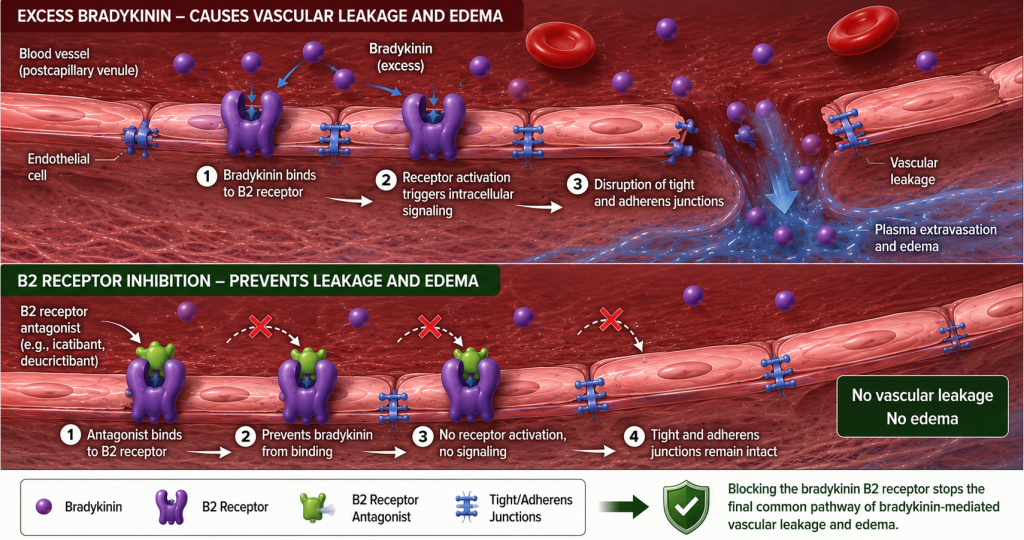
Excessive bradykinin signaling through the bradykinin B2 receptor disrupts endothelial tight and adherens junctions, increasing vascular permeability and promoting plasma extravasation into surrounding tissues. Experimental evidence further demonstrates that bradykinin B2 receptor antagonism preserves endothelial barrier integrity by preventing disruption of these endothelial junctions, reinforcing the receptor’s central role in the pathogenesis of bradykinin-mediated angioedema.
Clinical Perspective
The review identifies the bradykinin B2 receptor as the final common mediator of swelling, making it an attractive therapeutic target regardless of the upstream mechanism responsible for excessive bradykinin production or receptor activation. Clinical evidence supporting bradykinin B2 receptor antagonism is strongest in hereditary angioedema due to C1 inhibitor deficiency (HAE-C1INH), where its therapeutic benefit has been well established. Supportive, although comparatively more limited, evidence is also available for hereditary angioedema with normal C1 inhibitor (HAE-nC1INH) and acquired angioedema due to C1 inhibitor deficiency (AAE-C1INH).
Unlike therapies that target upstream components of the kallikrein-kinin pathway, bradykinin B2 receptor antagonism directly blocks the receptor through which bradykinin exerts its pathological effects. Consequently, this therapeutic strategy has the potential to remain effective irrespective of the upstream mechanism responsible for excessive bradykinin production, providing a mechanism-based approach to controlling bradykinin-mediated swelling.
The clinical success of the injectable bradykinin B2 receptor antagonist icatibant, together with emerging clinical evidence supporting investigational oral therapies such as deucrictibant, demonstrates that direct inhibition of the final effector pathway can provide rapid and targeted control of bradykinin-mediated swelling while reducing dependence on upstream pathway inhibition.
Key Scientific Insights
Beyond angioedema, the review summarizes mechanistic, translational, and emerging clinical evidence suggesting that dysregulated bradykinin signaling may contribute to several allergic, inflammatory, and vascular disorders, including bronchial asthma, chronic cough, allergic rhinitis, and chronic urticaria. Although these potential indications remain investigational, the available evidence provides a strong scientific rationale for continued evaluation of bradykinin B2 receptor antagonism beyond rare bradykinin-mediated angioedema.
Importantly, the authors note that decades of clinical experience have not identified increased risks of long-term unfavorable effects associated with bradykinin B2 receptor antagonism, supporting continued investigation of this therapeutic approach. While long-term clinical experience with injectable therapy is well established, additional long-term safety data from investigational oral bradykinin B2 receptor antagonists will further define their benefit-risk profile as these agents continue clinical development. Nevertheless, the authors emphasize that prospective clinical studies are still required to establish the therapeutic role of bradykinin B2 receptor antagonism in inflammatory and vascular diseases beyond angioedema.
Researcher Perspective
In this collaborative review, researchers from leading academic institutions together with scientists from Pharvaris integrate molecular biology, experimental evidence, translational research, and clinical outcomes to establish the bradykinin B2 receptor as one of the best-validated therapeutic targets in hereditary and acquired bradykinin-mediated angioedema.
The publication also provides a robust scientific rationale for investigating bradykinin B2 receptor antagonism in additional disorders characterized by increased vascular permeability and dysregulated inflammatory signaling, while emphasizing the need for prospective clinical validation before broader therapeutic applications can be established.
What This Research Means?
The review reinforces bradykinin B2 receptor antagonism as a cornerstone mechanism-based therapeutic strategy for bradykinin-mediated angioedema while highlighting opportunities to expand its application to additional inflammatory and vascular diseases. Ongoing late-stage clinical development of oral bradykinin B2 receptor antagonists, including deucrictibant, may broaden treatment options by combining targeted efficacy with the convenience of oral administration.
If ongoing clinical trials confirm their efficacy and long-term safety, next-generation oral therapies could make mechanism-based treatment more accessible and patient-friendly by reducing reliance on injectable therapies while maintaining targeted inhibition of the final pathway responsible for bradykinin-mediated swelling. Beyond hereditary and acquired angioedema, future prospective clinical studies will determine whether bradykinin B2 receptor antagonism can be successfully extended to broader inflammatory and vascular disorders in which dysregulated bradykinin signaling contributes to disease pathogenesis.
Reference

About the Writer
Mayuresh Sunil Salvi (Linkedin) is a PharmD professional and healthcare writer with a strong interest in pharmacovigilance, drug safety, and emerging medical research. He is passionate about exploring new drug discoveries, clinical research, and advances in evidence-based medicine. His interests also include ward rounds, prescription audits, and treatment analysis to support rational pharmacotherapy and improved patient care.