
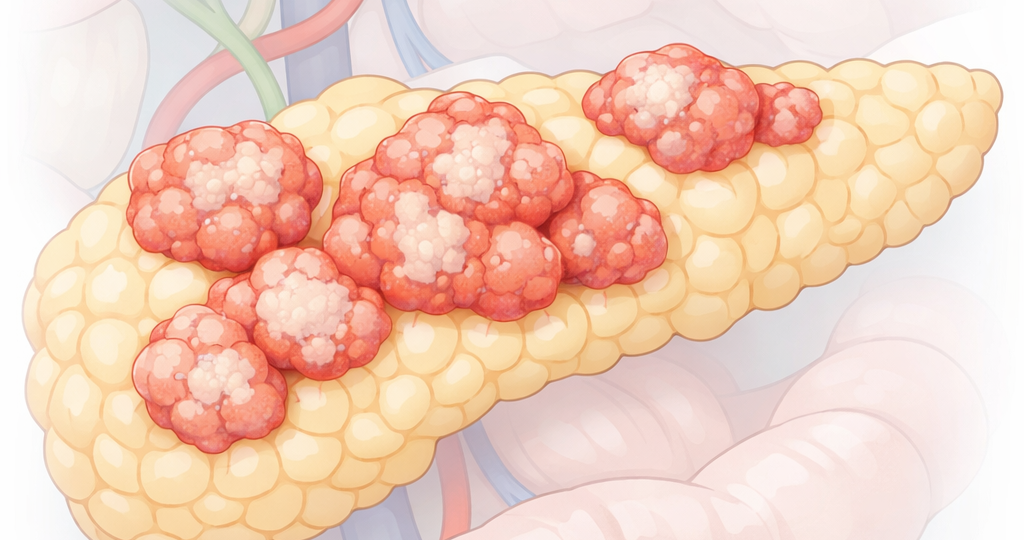
Namodenoson showed durable disease stabilization and encouraging survival in advanced pancreatic cancer. Phase 2a results will be presented at ESMO 2026 as Can-Fite advances a Phase 2b combination study.
Written By: Nalam Karthik, PharmD
Reviewed By: Pharmacally Editorial Team
Can-Fite BioPharma will present positive Phase 2a clinical data (NCT06387342) for Namodenoson in patients with advanced pancreatic ductal adenocarcinoma (PDAC) at the European Society for Medical Oncology (ESMO) Congress 2026 after the study abstract was accepted for poster presentation. The results highlight durable disease stabilization and encouraging survival in a patient population with limited treatment options following progression on standard therapies.
The accepted abstract, titled “Durable Disease Stabilization with Namodenoson in Advanced Pancreatic Adenocarcinoma: Results from a Phase 2a Study,” showcases findings from a study that met its primary safety endpoint while demonstrating sustained clinical benefit in patients with advanced disease. According to the company, most participants received Namodenoson as third-line therapy, while one patient treated in the second-line setting remains alive more than 18 months after starting treatment.
Scientific and Clinical Context
Pancreatic ductal adenocarcinoma is the most common form of pancreatic cancer and remains one of the deadliest solid tumors worldwide. Most patients present with advanced or metastatic disease, and survival after failure of first- and second-line therapies remains poor. Effective treatments that provide durable disease control with acceptable tolerability continue to represent a major unmet medical need.
Namodenoson is an orally available, highly selective A3 adenosine receptor (A3AR) agonist. The receptor is overexpressed in many diseased cells, including cancer cells, but shows relatively low expression in normal tissues. This selective expression is believed to contribute to the drug’s favorable safety profile while promoting apoptosis in tumor cells. Preclinical studies have also demonstrated anti-tumor activity in pancreatic cancer models.
Phase 2a Trial Findings
The Phase 2a study evaluated oral Namodenoson in patients with advanced PDAC whose disease had progressed after previous standard therapies. The trial successfully achieved its primary safety endpoint and showed encouraging survival outcomes alongside durable disease stabilization in this heavily pretreated population.
Although detailed efficacy analyses have not yet been released, the company highlighted prolonged survival in several patients despite advanced disease. The observation that a second-line patient remains alive more than 18 months after treatment initiation further supports continued investigation of the therapy. Namodenoson also maintained an encouraging safety profile throughout the study, consistent with findings from previous clinical programs.
Additional details, including the presentation date, session information, and poster number, will be announced by ESMO closer to the congress.
Clinical Implicaitons
Chairperson and Chief Scientific Officer Pnina Fishman, Ph.D. said the abstract’s acceptance by ESMO provides important scientific recognition for the pancreatic cancer program and offers an opportunity to present the clinical findings to the international oncology community. She noted that the results strengthen the rationale for advancing Namodenoson as a potential treatment option for patients with advanced pancreatic cancer.
Path Forward
Can-Fite is preparing the next stage of clinical development with a Phase 2b trial that will evaluate Namodenoson in combination with chemotherapy. The study builds on the encouraging clinical findings from the Phase 2a program and preclinical evidence suggesting synergistic anti-tumor activity when combined with standard chemotherapy.
Beyond pancreatic cancer, Namodenoson is also under clinical development in a pivotal Phase 3 trial for advanced hepatocellular carcinoma and an ongoing Phase 2b study in metabolic dysfunction-associated steatohepatitis (MASH), reflecting the broader therapeutic potential of the A3AR-targeted therapy across oncology and inflammatory diseases.
Reference

About the Writer
Nalam Karthik (LinkedIn) is a healthcare writer and PharmD graduate with interests in pharmacovigilance, drug safety, clinical data analysis, and quality assurance. He is passionate about translating clinical and pharmaceutical knowledge into accessible healthcare content while staying engaged with advancements in drug development and patient safety initiatives.