
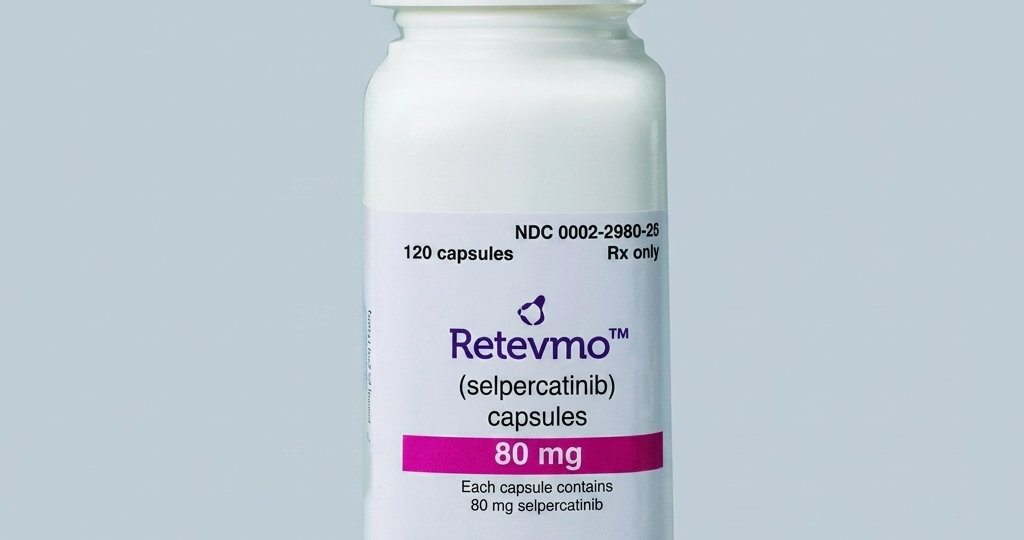
The FDA has granted full approval to Retevmo (selpercatinib) for adults and children aged 2 years and older with RET fusion-positive advanced solid tumors, confirming durable responses across multiple cancer types.
Written By: Samiksha Jadhav, BPharm
Reviewed By: Pharmacally Editorial Team
The U.S. Food and Drug Administration has granted traditional approval to Retevmo (selpercatinib) for the treatment of adult and pediatric patients aged 2 years and older with locally advanced or metastatic RET fusion-positive solid tumors that have progressed following prior systemic therapy or have no satisfactory alternative treatment options. Eligible patients must have tumors confirmed by an FDA-approved diagnostic test.
The approval, granted to Eli Lilly and Company, converts the accelerated approval previously awarded for adults in 2022 and expanded to pediatric patients in 2024 into a full approval after confirmation of clinical benefit. The FDA completed its review approximately two months ahead of the target action date.
Targeting RET Fusion Across Multiple Rare Cancers
Selpercatinib is an oral, selective RET kinase inhibitor that blocks abnormal RET signaling, a recognized driver of tumor growth in several cancers. Although RET fusions occur in only a small proportion of solid tumors, they are found across multiple malignancies, making RET inhibition an important precision oncology strategy.
The tissue-agnostic approval allows treatment based on the presence of a RET gene fusion rather than the tumor’s site of origin, reflecting the growing role of biomarker-driven cancer therapy.
LIBRETTO-001 Confirmed Durable Responses
The approval was primarily supported by results from the multicenter, open-label Phase 1/2 LIBRETTO-001 trial (NCT03157128), with additional evidence from studies in RET fusion-positive non-small cell lung cancer and thyroid cancer. Among 75 patients with RET fusion-positive solid tumors other than NSCLC and thyroid cancer, selpercatinib achieved an overall response rate (ORR) of 47% (95% CI: 35% to 59%). The median duration of response (DOR) was 24.5 months (95% CI: 11.2 to 49.1 months), demonstrating durable clinical benefit across multiple rare tumor types.
Responses were observed across a broad range of malignancies, including colorectal cancer, pancreatic adenocarcinoma, cholangiocarcinoma, breast cancer, ovarian cancer, salivary gland cancer, soft tissue sarcoma, neuroendocrine tumors, bronchial carcinoid, carcinoma of unknown primary, skin carcinoma, and small intestine cancer.
Pediatric efficacy was supported by the multicenter LIBRETTO-121 study (NCT03899792), which enrolled children and young adults with advanced RET fusion-positive solid tumors that were refractory to available therapies or lacked curative treatment options. Confirmed responses were reported in patients with congenital infantile fibrosarcoma, spindle cell sarcoma, and RET fusion-positive thyroid cancer.
Safety Profile and Recommended Dosing
The prescribing information includes warnings for hepatotoxicity, interstitial lung disease or pneumonitis, hypertension, QT interval prolongation, hemorrhagic events, hypersensitivity reactions, tumor lysis syndrome, impaired wound healing, hypothyroidism, embryo-fetal toxicity, and slipped capital femoral epiphysis in pediatric patients.
For adults and adolescents aged 12 years and older, the recommended oral dose of selpercatinib is 120 mg twice daily for patients weighing less than 50 kg and 160 mg twice daily for those weighing 50 kg or more. Weight-based dosing recommendations for children aged 2 years to less than 12 years are provided in the full prescribing information.
Regulatory Status and Path Forward
The FDA granted orphan drug designation for the tissue-agnostic indication. By converting selpercatinib’s accelerated approval into traditional approval, the agency confirms durable antitumor activity across multiple RET fusion-positive cancers and reinforces the role of molecular testing in identifying patients who may benefit from targeted therapy. The decision also provides greater long-term regulatory certainty for clinicians and patients using RET-directed precision medicine.
What This Means for Patients
Patients with RET fusion-positive advanced solid tumors now have a fully FDA-approved targeted treatment option after disease progression on standard therapy or when no satisfactory alternatives exist. The decision confirms that selpercatinib provides durable tumor responses across several rare cancer types, supporting its long-term use in both adults and children aged 2 years and older. It also underscores the importance of comprehensive genomic testing, which can identify RET gene fusions and help eligible patients access precision medicine tailored to the genetic profile of their cancer.
Reference

About the Writer
Samiksha Vikram Jadhav (LinkedIn) is a B. Pharm graduate with a strong academic foundation in pharmaceutical sciences, pharmacology, and drug development. She specializes in pharma market research, with a focused interest in mergers and acquisitions, strategic partnerships, and global pharma and biotech deals. Her work centers on analyzing industry transactions, market positioning, and business strategies, translating complex developments into clear, accurate, and insightful scientific and commercial reporting.