
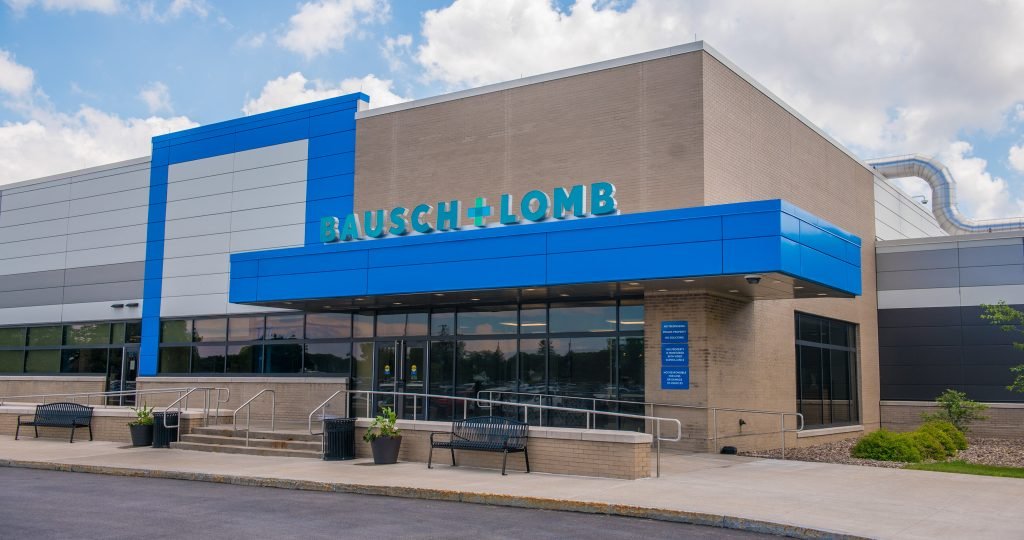
Bausch + Lomb reported Phase 2 results for BL1107 in glaucoma, failing to improve visual function. The company will discontinue topical development and advance BL1107 as a sustained‑release implant for geographic atrophy, with trials expected in 2028.
Written By: Anshu Gupta, PharmD
Reviewed By: Pharmacally Editorial Team
On July 9, 2026, Bausch + Lomb reported topline results from its Phase 2 clinical trial evaluating BL1107, an investigational eye drop for primary open-angle glaucoma and ocular hypertension. The study failed to meet its primary endpoint of improving visual function after 28 days of treatment, leading the company to discontinue development of BL1107 as a topical glaucoma therapy. However, the program will continue in a different formulation as a sustained-release implant for geographic atrophy (GA), a vision-threatening retinal disease.
Scientific Background
Glaucoma is a progressive optic neuropathy characterized by damage to the optic nerve, most commonly associated with elevated intraocular pressure (IOP). It is one of the leading causes of irreversible blindness worldwide. Current treatments effectively lower IOP and slow disease progression but do not directly protect retinal ganglion cells or restore lost vision. As a result, therapies capable of preserving visual function beyond pressure reduction remain an important unmet need in glaucoma care.
BL1107 is an investigational small-molecule therapy acquired through Bausch + Lomb’s 2025 acquisition of Whitecap Biosciences, where it was previously known as WB007. The candidate was evaluated as a potential neuroprotective therapy with the goal of preserving visual function beyond conventional IOP-lowering treatment. Encouraging findings from an earlier Phase 1/2a study prompted advancement into Phase 2, although those results required confirmation in a larger clinical trial.
Clinical Evidence
The randomized, double-masked, three-arm, parallel-group Phase 2 study (NCT07168902) enrolled 159 adults with primary open-angle glaucoma or ocular hypertension. Participants were randomized to receive low-dose BL1107, high-dose BL1107, or timolol 0.5% twice daily for 28 days.
The primary endpoint assessed the change from baseline in visual field mean deviation (VF MD) at Day 28. The trial did not demonstrate an improvement in visual function compared with timolol and failed to reproduce the efficacy signals reported in the earlier proof-of-concept study. Key secondary endpoints, including low-luminance best-corrected visual acuity responder rates, were also not achieved.
Despite the lack of visual function benefit, BL1107 met a secondary endpoint by reducing intraocular pressure at Day 28, demonstrating ocular target engagement. The treatment’s safety profile remained consistent with previous clinical experience, and no new safety signals were identified.
Based on the overall efficacy and safety findings, Bausch + Lomb concluded that the available evidence did not support further development of BL1107 as a topical treatment for glaucoma.
Clinical Implications and Path Forward
Commenting on the results, Yehia Hashad, MD, executive vice president of Research & Development and chief medical officer at Bausch + Lomb, said that successful drug development depends on maintaining a diversified research portfolio rather than relying on a single investigational program. He noted that while BL1107 did not achieve its objectives in glaucoma, the study provides valuable evidence to guide future development decisions.
Importantly, this decision halts topical BL1107 development prior to any regulatory submission, clarifying that no NDA or MAA pathway will be pursued for glaucoma.
The company will continue development of BL1107 as a sustained-release implant for geographic atrophy, the primary focus behind its acquisition of Whitecap Biosciences. The program is being developed in collaboration with Ripple Therapeutics using its controlled-release drug delivery platform, with clinical trials expected to begin in 2028.
Beyond BL1107, Bausch + Lomb stated that its ophthalmology pipeline includes more than 60 development programs spanning pharmaceuticals, surgical technologies, vision care, and consumer eye health, with multiple clinical, regulatory, and commercial milestones anticipated over the coming years.
Reference

About the Writer
Anshu Gupta (LinkedIn) is a PharmD professional and healthcare writer with interests in clinical research, pharmacovigilance, regulatory affairs, and medical writing. She has presented research at academic conferences and completed certifications in Good Clinical Practice (GCP), ICH-GCP, and drug safety. Passionate about clinical trials and evidence-based medicine, she is committed to translating scientific evidence into accurate, reliable, and accessible healthcare content.