
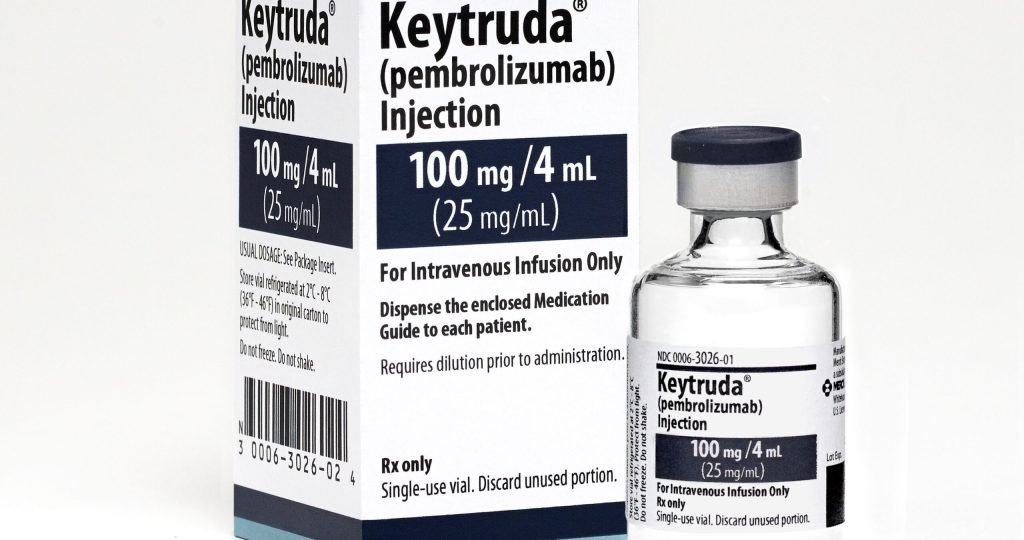
The FDA has approved KEYTRUDA (pembrolizumab) plus WELIREG (belzutifan) for high-risk clear cell renal cell carcinoma after nephrectomy. Phase 3 LITESPARK-022 data showed a 28% reduction in recurrence, metastasis, or death versus KEYTRUDA alone.
Written By: Kirti Kumbhar, M. Pharm (QA)
Reviewed By: Pharmacally Editorial Team
The U.S. Food and Drug Administration (FDA) has approved KEYTRUDA® (pembrolizumab) and KEYTRUDA QLEX™ (pembrolizumab and berahyaluronidase alfa-pmph), each in combination with WELIREG® (belzutifan), for the adjuvant treatment of adults with clear cell renal cell carcinoma (ccRCC) at intermediate-high or high risk of recurrence following nephrectomy, with or without resection of metastatic lesions.
The approval marks the first use of WELIREG in earlier-stage ccRCC and establishes the first approved combination of a PD-1 inhibitor and a hypoxia-inducible factor-2 alpha (HIF-2α) inhibitor. It also introduces the first Phase 3-validated regimen to improve disease-free survival beyond KEYTRUDA monotherapy in the adjuvant setting.
Targeting Immune Evasion and Tumor Hypoxia
Clear cell renal cell carcinoma accounts for approximately 70% of kidney cancer cases and remains vulnerable to recurrence even after curative-intent surgery. Many patients who relapse eventually develop metastatic disease, highlighting the need for more effective adjuvant therapies.
Pembrolizumab blocks the PD-1 immune checkpoint, restoring anti-tumor immune responses. Belzutifan is a first-in-class oral HIF-2α inhibitor that disrupts cellular pathways involved in tumor growth, angiogenesis, and adaptation to low-oxygen environments. The combination targets two complementary drivers of kidney cancer progression.
Phase 3 LITESPARK-022 Delivers Disease-Free Survival Benefit
The approval is based on the pivotal Phase 3 LITESPARK-022 trial (NCT05239728), a randomized, double-blind study involving 1,841 patients with intermediate-high-risk, high-risk, or M1 no evidence of disease (NED) ccRCC following nephrectomy.
Patients received either belzutifan 120 mg once daily plus pembrolizumab 400 mg every six weeks for up to nine cycles, or pembrolizumab with placebo.
The study met its primary endpoint, demonstrating a 28% reduction in the risk of disease recurrence, metastasis, or death compared with KEYTRUDA plus placebo (HR 0.72; 95% CI 0.59–0.87; p=0.0003). Estimated disease-free survival at 24 months reached 81% with the combination versus 74% with pembrolizumab alone. Median disease-free survival had not been reached in either arm at the interim analysis, while overall survival data remain immature.
Safety Profile Reflects Known Risks of Both Agents
Safety findings were generally consistent with the established profiles of pembrolizumab and belzutifan. Serious adverse events occurred in 30% of patients receiving the combination, with pneumonia, hypoxia, pneumonitis, arrhythmia, diarrhea, and acute kidney injury among the most common events.
Belzutifan was permanently discontinued in 27% of patients, most frequently because of anemia, fatigue, rash, elevated liver enzymes, hypoxia, or pneumonitis. Pembrolizumab discontinuations occurred in 23% of patients. The most common treatment-emergent laboratory and clinical adverse events included decreased hemoglobin, elevated ALT and AST, fatigue, lymphopenia, and increased alkaline phosphatase levels.
Clinicians See a New Option for Preventing Recurrence
Toni K. Choueiri, MD, of Dana-Farber Cancer Institute, noted that recurrence remains a major concern for patients with high-risk kidney cancer after surgery. He highlighted the trial’s 28% reduction in recurrence, metastasis, or death as a meaningful advance for maintaining long-term disease control.
Merck’s clinical development leadership emphasized the importance of extending disease-free survival in patients with earlier-stage cancer, while kidney cancer advocacy groups welcomed the approval as a significant expansion of treatment options.
Impact on Clinical Practice
The approval strengthens Merck’s strategy of moving established oncology therapies into earlier disease settings. More than 30 registrational studies are currently evaluating KEYTRUDA-based approaches in early-stage cancers, while belzutifan continues to expand across renal cell carcinoma and other solid tumor programs.
For patients with high-risk ccRCC following surgery, the newly approved KEYTRUDA-WELIREG regimen introduces a new adjuvant standard supported by a clinically meaningful disease-free survival benefit and a novel dual-mechanism approach.
Reference

About the Writer
Kirti Kumbhar (LinkedIn) is an M.Pharm graduate with experience in Quality Assurance at Lupin Limited and a strong interest in clinical research, regulatory affairs, and Trial Master File (TMF) management. She has developed knowledge of regulatory documentation, quality systems, compliance, and healthcare research through her professional experience. Passionate about clinical development and continuous learning, Kirti is committed to supporting high-quality healthcare documentation, regulatory excellence, and research-driven healthcare advancements.