
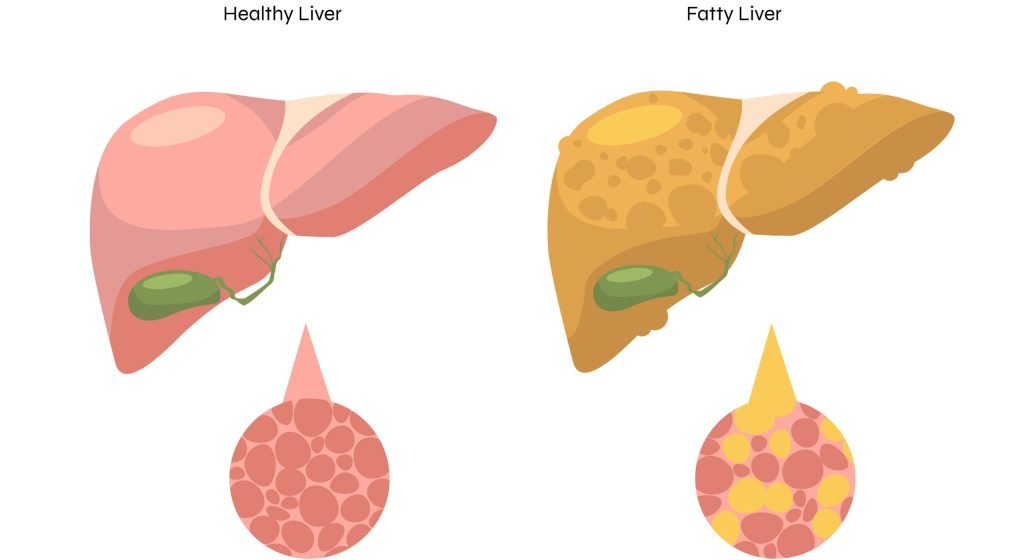
Arrowhead Pharmaceuticals reported interim Phase 1/2a data at EASL 2026 showing investigational RNAi therapy ARO‑INHBE reduced liver fat in adults with obesity and MASH, both as monotherapy and in combination with tirzepatide, supporting advancement into Phase 2 development.
Written By: Chikkula Pavan Kumar, PharmD
Reviewed By: Pharmacally Editorial Team
Arrowhead Pharmaceuticals presented new interim Phase 1/2a data at the European Association for the Study of the Liver (EASL) Congress 2026 showing that investigational RNA interference therapy ARO-INHBE reduced liver fat content in adults with obesity, both as monotherapy and in combination with low-dose tirzepatide. The findings support continued development of the therapy in obesity and metabolic dysfunction-associated steatohepatitis (MASH).
Mechanism of Action
ARO-INHBE targets the INHBE gene, which encodes Activin E, a signaling protein involved in adipose tissue energy regulation and fat storage. Human genetic studies have linked loss-of-function INHBE variants with healthier fat distribution and lower risk of metabolic diseases including type 2 diabetes.
By suppressing hepatic Activin E production, ARO-INHBE may enhance lipolysis, reduce visceral adiposity, and improve insulin sensitivity. The approach represents a novel strategy targeting adipose biology beyond incretin-based therapies currently used in obesity management.
Study Design and Outcomes
The ongoing dose-escalation Phase 1/2a AROINHBE-1001 study (NCT06700538) enrolled adults with obesity, including patients with type 2 diabetes. Investigators assessed safety, pharmacokinetics, pharmacodynamics, and exploratory efficacy endpoints including hepatic fat reduction and visceral adipose tissue changes.
Among participants with baseline liver fat content above 8%, ARO-INHBE monotherapy at doses of 200 mg or higher produced a placebo-adjusted 44% reduction in liver fat burden (p<0.01).
Investigators also reported dose-dependent reductions in Activin E levels, with a mean maximum reduction of 85.3% observed after a single 400 mg dose. The pharmacodynamic effect persisted beyond three months, supporting the potential for infrequent dosing.
Combination with Tirzepatide
In combination cohorts, ARO-INHBE was evaluated alongside low-dose tirzepatide, a GLP-1/GIP receptor agonist approved for type 2 diabetes and weight management.
The combination produced greater reductions in visceral adipose tissue and hepatic fat compared with tirzepatide alone in patients with obesity, with or without type 2 diabetes. Investigators also observed continued improvements between Weeks 12 and 24, suggesting durable metabolic activity with longer treatment exposure.
The findings add to growing industry interest in combination metabolic therapies that pair incretin agents with novel pathways targeting adipose dysfunction and insulin resistance.
Safety Profile
ARO-INHBE remained generally well tolerated as both monotherapy and combination therapy. Most treatment-emergent adverse events were mild, and no adverse events led to treatment discontinuation.
Injection-site reactions were generally mild and self-limited.
Regulatory Path Ahead
James Hamilton, Chief Medical Officer and Head of R&D at Arrowhead, said the data further validate the Activin E/ALK7 pathway as a potential therapeutic target in obesity and MASH and may complement existing incretin-based approaches.
Arrowhead is currently engaging with regulatory authorities on Phase 2 study design and endpoints as it advances ARO-INHBE into later-stage development.
Reference

About the Writer
Chikkula Pavan Kumar (LinkedIn), PharmD is a Doctor of Pharmacy with a keen interest in clinical pharmacy, pharmacovigilance, and evidence-based practice. In his words, he is passionate about patient safety and translating complex medical information into clear, research-driven communication.