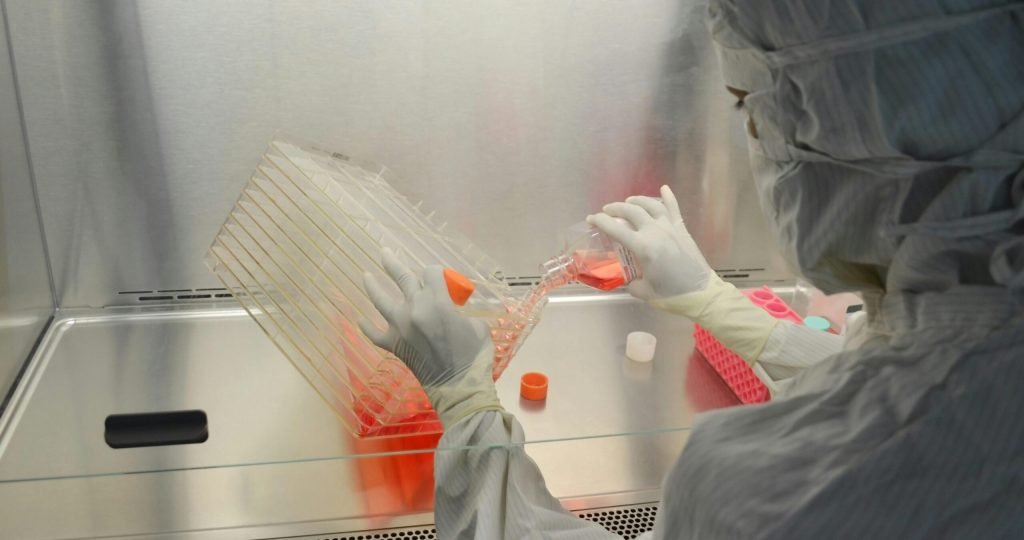
AskBio has introduced a commercial-scale manufacturing process for its investigational Parkinson’s gene therapy, enabling supply for its Phase II REGENERATE-PD trial following an updated filing with the U.S. Food and Drug Administration.
Written By: Mahathi Palivela, PharmD
Reviewed By: Pharmacally Editorial Team
AskBio a wholly owned and independently operated subsidiary of Bayer AG has introduced a commercially ready manufacturing process to support the supply of its investigational gene therapy, ametefgene parvec (AB-1005), following an amendment to its Investigational New Drug (IND) application submitted to the U.S. Food and Drug Administration.
The new process uses a next-generation, large-scale suspension platform designed to produce high-purity adeno-associated viral (AAV) gene therapy material, enabling the company to advance clinical development using material manufactured at its subsidiary Viralgen.
This manufacturing capability will support the ongoing REGENERATE-PD Phase II clinical trial (NCT06285643) in the United States, with additional sites planned globally. The study is currently enrolling participants across Germany, Poland, the United Kingdom, and the United States, and has already initiated patient randomization in Germany.
Canwen Jiang, Chief Development and Medical Officer at AskBio, stated that the company has begun supplying investigational therapy to trial participants through its manufacturing platform.
Christian Rommel, Global Head of Research and Development for Bayer AG’s Pharmaceuticals Division, highlighted that efficient manufacturing of AAV-based therapies is critical for advancing mid-stage clinical programs and meeting regulatory standards.
Ametefgene parvec has received multiple regulatory designations, including Regenerative Medicine Advanced Therapy (RMAT) and Fast Track designations from the FDA, Innovation Passport designation from the UK regulator, and SAKIGAKE designation in Japan, all for Parkinson’s disease.
In parallel, the therapy is being evaluated in a fully enrolled Phase I study in the United States for the parkinsonian subtype of multiple system atrophy (MSA-P), focusing on safety, tolerability, and preliminary efficacy.
Ametefgene parvec (AB-1005) is an investigational gene therapy designed to slow disease progression and improve motor outcomes in Parkinson’s disease by delivering the gene for glial cell line-derived neurotrophic factor (GDNF) directly to targeted brain regions.
Preclinical evidence suggests GDNF may support the survival and regeneration of dopaminergic neurons, which are progressively lost in the disease. The therapy remains investigational, and its safety and efficacy have not yet been established by regulatory authorities.
Parkinson’s disease is a progressive neurodegenerative disorder marked by the loss of dopamine-producing neurons, leading to motor symptoms such as tremors, rigidity, and slowed movement, along with non-motor symptoms including fatigue, cognitive impairment, and depression. More than 10 million people worldwide are affected, and there is currently no cure. The parkinsonian subtype of multiple system atrophy is a rare, rapidly progressing condition with overlapping early features but significant autonomic dysfunction, affecting approximately 400,000 people globally and lacking approved treatments.
Reference

About the Writer
Mahathi Palivela is pursuing PharmD and has a strong interest in Clinical Pharmacy and Patient safety. She is passionate about handling and analyzing patient data, and translating clinical insights into clear, meaningful summaries. She aims to apply this interest in Medical Writing and Pharmacovigilance, focusing on improving patient outcomes through careful data interpretation and communication .