
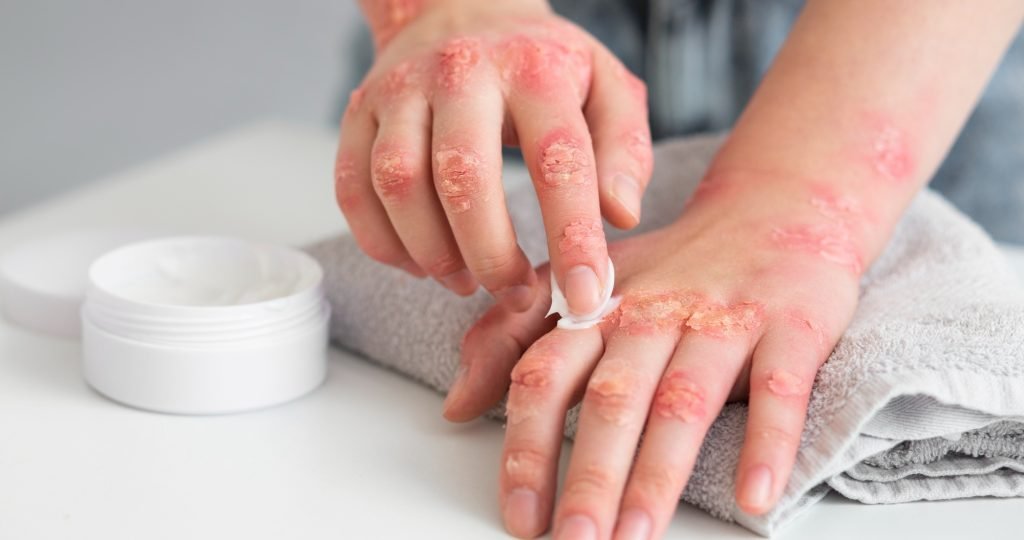
Organon reports pooled Phase 3 ADORING trial data showing VTAMA cream delivers early itch relief and significant skin clearance in atopic dermatitis patients aged 2 and older.
Written By: Nikita Jha, BPharm
Reviewed By: Pharmacally Editorial Team
Organon reported new post-hoc pooled data from its Phase 3 ADORING 1 (NCT05014568) and ADORING 2 trials (NCT05032859) at the American Academy of Dermatology (AAD) Annual Meeting 2026, showcasing the efficacy and safety of VTAMA® (tapinarof) cream in patients with moderate to severe Atopic Dermatitis (AD), including children as young as two years old.
The analysis demonstrated rapid and consistent improvements in disease severity and itch, with clinically meaningful responses observed as early as week one. Efficacy was assessed using vIGA-AD, EASI, and PP-NRS scores, all of which showed statistically significant improvements compared with vehicle across the 8-week treatment period.
VTAMA cream, an aryl hydrocarbon receptor (AhR) agonist, achieved early vIGA-AD response rates at week 1 (5.8% vs. 1.6%) that increased to 45.9% by week 8, compared to 15.9% with vehicle. Similarly, EASI75 responses were significantly higher with VTAMA from week 1 (9.0% vs. 3.3%) through week 8 (57.4% vs. 22.1%). Improvements in itch, defined by a ≥4-point reduction in PP-NRS, were also evident early (18.8% vs. 11.3% at week 1) and sustained through week 8 (59.3% vs. 33.5%).
Notably, 96.9% of patients treated with VTAMA achieved some level of EASI improvement at week 8. The treatment was generally well tolerated, with common adverse events including folliculitis, headache, upper respiratory tract infection, and nasopharyngitis.
Commenting on the findings, Linda Stein Gold emphasized the importance of rapid symptom relief in AD, particularly itch reduction and visible skin clearance. She noted that the results, especially in a population where approximately 80% were children, support VTAMA as an evidence-based option for early disease control.
Juan Camilo Arjona Ferreira added that the data reinforce Organon’s commitment to dermatology, highlighting VTAMA’s potential to deliver early and sustained benefits in a condition marked by persistent itch and inflammation.
VTAMA cream received approval from the U.S. Food and Drug Administration in December 2024 for the treatment of atopic dermatitis in adults and pediatric patients aged two years and older, following its earlier 2022 approval for plaque psoriasis in adults.
The ADORING clinical program includes two 8-week pivotal trials (ADORING 1 and 2; N=813) and an ongoing long-term extension study (ADORING 3), supporting the clinical profile of VTAMA across both short- and long-term use.
Atopic dermatitis remains one of the most common inflammatory skin conditions globally, affecting millions of adults and children, with itch and visible skin lesions continuing to drive significant disease burden and unmet need for effective, well-tolerated therapies.
Reference
Organon Debuts New Analysis of VTAMA® (tapinarof) cream, 1%, Phase 3 Pooled Data Demonstrating Early and Consistent Skin Clearance and Itch Improvement in Atopic Dermatitis Patients Down to 2 Years of Age, 27 March 2026, Organon Debuts New Analysis of VTAMA® (tapinarof) cream, 1%, Phase 3 Pooled Data Demonstrating Early and Consistent Skin Clearance and Itch Improvement in Atopic Dermatitis Patients Down to 2 Years of Age | Organon
Tapinarof for the Treatment of Atopic Dermatitis in Children and Adults, ClinicalTrials.gov ID NCT05014568, https://clinicaltrials.gov/study/NCT05014568
Tapinarof for the Treatment of Atopic Dermatitis in Children and Adults (DMVT-505-3102), ClinicalTrials.gov ID NCT05032859, https://clinicaltrials.gov/study/NCT05032859


About the Writer
Nikita Jha BPharm is a pharmacy graduate with expertise in clinical research, pharmacovigilance, and medical writing. In her words, she is passionate about translating complex scientific data into clear, accurate healthcare communications that advance drug safety and patient care.